



Picture this.
A diner settles into a three-star dining room expecting the usual flex of old-school luxury. The truffle-shaving performance. The foie gras cameo. That quiet moment when the server whispers “butter poached” and everyone at the table involuntarily sighs.
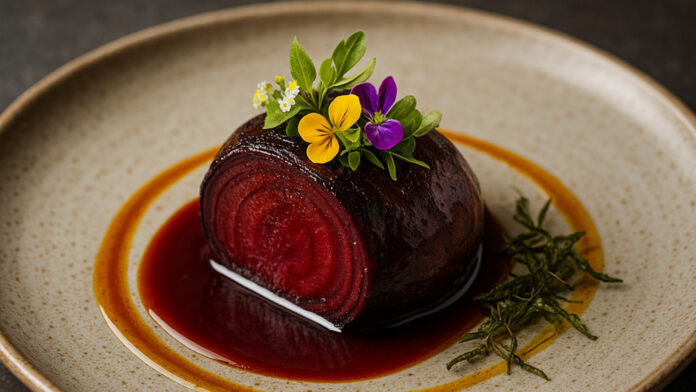
Instead, the first dish lands: a glistening, slow-roasted beet, lacquered in its own jus and a fermented carrot-top garum that took weeks to coax into existence. It’s plated with the swagger of a crown jewel. Suddenly the entire room is pretending not to stare — but absolutely is.
This is the new power move in fine dining.
The new luxury is leafy.
And chefs everywhere are fully committed to the bit.
Across Paris, New York, Copenhagen, Seoul, and a growing constellation of cities that once would’ve rolled their eyes at plant-driven menus, next-generation plant-based haute cuisine is no longer niche. It’s a cultural reset.
Vegetables aren’t the supporting cast anymore. They’re Beyoncé.
Vegetables Take the Spotlight, And Everyone’s Watching
For decades, vegetables existed mostly as polite backup dancers — butter-painted, lightly caramelized, never the star.
But culture changed.
A new generation of diners showed up with climate anxiety, a love for “not feeling wrecked tomorrow,” and a low-key obsession with food that tastes indulgent and intentional. They still want fantasy. They still want the kind of dinner that becomes a personality trait on Instagram. They just don’t need a steak to hold their hand through it.
Chefs, meanwhile, got restless. There are only so many ways to reinvent beef. But a carrot? A celeriac? A mushroom? Those have infinite moods, textures, and narrative potential.
Add to this a global plant-based market sprinting toward the $100B mark, Michelin giving stars to vegetarian menus, and diners casually calling themselves “flexitarian,” and you get the perfect storm for a leafy revolution.
The Culinary Wizardry Making Plants Taste Like Pure Decadence
Next-gen plant cuisine isn’t about sacrifice.
It’s about technique — big, serious, wildly fun technique.
Fermentation: The New Stock Pot
Koji is the quiet MVP. Chefs use it to turn vegetable trim, grains, and seeds into misos, shio-koji marinades, nutty amazake, and deeply savory garums. A tomato-stem garum might sit in the same role once held by veal demi-glace.
Every vegetable gets an entourage: powders, oils, pickles, ferments — a whole micro-universe of flavor.
Modernist Tools, Still Invited
Silky plant-based custards stabilized with hydrocolloids. Aquafaba foams. Sous-vide leeks with perfect bite. Mushrooms treated like scallops. Dehydrated roots crisped into vegetal charcuterie.
Science hasn’t left the chat — it’s just switched teams.
Vegetable Butchery Becomes an Art Form
Whole roasted cabbages carved like prime rib. King oyster mushrooms browned like seafood. Celeriac braised into spoon-tender “ossobuco.”
Vegetables get the same ceremony — the same respect — once reserved for wagyu.
Sourcing as a Status Symbol
The showiest flex isn’t imported caviar anymore.
It’s the chef saying, “This tomato grew on the east-facing terrace of our garden and was harvested 43 minutes ago.”
Hyper-local is the new haute.
The Dining Experience: Less Opera, More Emotional Arc
Plant-focused tasting menus don’t follow the fish-then-meat-then-dessert script.
They behave more like narratives.
You start with a spark: raw, fermented, crunchy bites meant to wake up your entire sensory system. Then comes the umami swell: roasted squash in its own glossy reduction, smoked mushrooms with “forest floor” aromatics, vegetables so layered you forget they’re vegetables.
Desserts go herbal, fruity, low-sugar. Something basil-y. Something citrus-bright. Something that makes you feel surprisingly… good.
Even pairings have gotten glow-ups: skin-contact wines, featherlight reds, kombucha flights, sparkling teas brewed like couture perfumes.
Luxury went to therapy, and it shows.
A Global Cast of Culinary Game Changers
Arpège (Paris)
Fully plant-based, honey aside. The first three-Michelin-star restaurant to go all-in on vegetables. The plates look like edible poetry.
Eleven Madison Park (New York)
EMP’s pivot to a fully plant-based tasting menu was a cultural earthquake. Their current plant-first, optional-protein model reflects reality — but their influence on the vegetable renaissance is permanent.
Mirazur (Menton, France)
Moon-cycle menus. Thousands of plant species. A dining experience that feels like eating inside a living ecosystem.
Baekyangsa Temple & Jeong Kwan (South Korea) — The Spiritual Core
You can’t talk about next-gen plant cuisine without bowing — metaphorically, but honestly maybe literally — to Jeong Kwan, the Korean Buddhist nun who became a global culinary icon thanks to Netflix’s Chef’s Table.
Her home, Baekyangsa Temple, is tucked into the mountains and technically not a restaurant. Yet it’s one of the most influential culinary destinations on earth. She cooks with no dairy, no alliums, no ego — just decades-deep fermentation, intuition, and Buddhist philosophy.
Her soy sauces age for years. Her kimchi tastes alive. Her mushrooms are handled with the kind of reverence most chefs reserve for truffles. Top chefs visit her for enlightenment disguised as lunch.
Jeong Kwan proved something essential:
plant-based cuisine doesn’t need luxury ingredients to feel transcendent — it only needs intention.
Her influence ripples across modern fine dining. Chefs reference her the way musicians reference Prince. Quietly. Reverently. With awe.
The Tensions Behind the Chlorophyll Curtain
It’s not all magic.
Plant-based haute cuisine is expensive to run. Fermentation takes time. Garden farming takes work. Some diners still want the old meaty visual cues of “value.” Wine pairings can skew lighter, meaning smaller checks. And if a restaurant flies in tropical fruit for a “sustainable” menu, the optics collapse.
But even with these pressures, almost no chef returns to the old ways once they’ve tasted the creative freedom of plant-forward cooking.
Once you discover what a carrot can do, it’s hard to go back.
The Future Is Deliciously Green
The next wave is already rising:
Plant-first menus with optional “protein chapters.”
Fermentation labs as standard kitchen equipment.
AI-aided R&D.
Precision-fermented fats and dairy alternatives.
Shorter, sharper, emotionally tuned tasting menus.
Luxury is being redefined — again.
Not by butter. Not by foie gras.
But by care, craft, biodiversity, and vegetables that tell stories worth listening to.
The age of leafy glamour isn’t coming.
It’s here.
And honestly?
It tastes incredible.
Discover more from SNAP TASTE
Subscribe to get the latest posts sent to your email.