



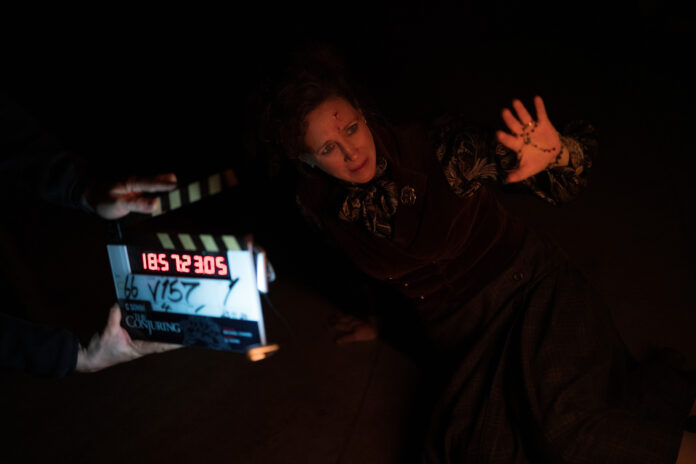
In the vast landscape of modern cinema, there are franchises that dazzle, franchises that endure, and then there are those that carve themselves into cultural memory as living myths. From the fertile imagination of New Line Cinema has emerged such a phenomenon: the Conjuring Universe. Since its inception, this universe of terror and truth, rooted in the case files of real-life paranormal investigators Ed and Lorraine Warren, has summoned more than two billion dollars at the global box office. Now, with The Conjuring: Last Rites, the ninth entry, director Michael Chaves, together with franchise architects James Wan and Peter Safran, guide us toward a story that is both an ending and a haunting beginning.
At its heart, this chapter is not merely another case. It is an ordeal that pierces the very core of the Warren family. For Vera Farmiga and Patrick Wilson, who return once more to embody Lorraine and Ed Warren, the tale is intimate, devastating, and final. They are joined by Mia Tomlinson and Ben Hardy as Judy Warren and her boyfriend Tony Spera, alongside familiar allies and new faces, Steve Coulter reprising Father Gordon, and Rebecca Calder, Elliot Cowan, Beau Gadsdon, Kíla Lord Cassidy, John Brotherton, and Shannon Kook joining the ensemble.
But as with any living organism, the film thrives not only on its stars but on the hidden structure beneath. From a screenplay by Ian Goldberg and Richard Naing and David Leslie Johnson-McGoldrick, from a story by Johnson-McGoldrick and James Wan, the narrative roots itself in characters originally created by Chad and Carey Hayes. Around it, a constellation of executive producers, Michael Clear, Judson Scott, Hans Ritter, Natalia Safran, John Rickard, and Chaves himself, safeguard its vision. And at every level of its anatomy, artisans work in delicate balance: Eli Born painting with light, John Frankish shaping physical spaces, Elliot Greenberg and Gregory Plotkin cutting rhythm into terror, Benjamin Wallfisch weaving atmosphere in music, and Graham Churchyard clothing each character in time itself.
Together, they construct not just a film, but an ecosystem, each element serving, supporting, and enhancing the whole.
The Warrens’ World Reborn
Every Conjuring tale begins with place, for places hold memory, and memory, like any living creature, can linger, fester, and haunt. To conjure the Warren home once again, supervising location manager Paul Howard scoured the English countryside until he discovered a period property in leafy Hertfordshire. Its sweeping driveway, its modern yet low profile architecture, its fragile single-pane windows, all whispered of 1970s and 80s Connecticut. Reclad and refashioned, it became the Warrens’ residence, nestling in landscaped grounds.
This house was no mere façade. The garage, home to Ed’s motorbike and car, was transformed into a space of family games, ping pong table and all. Set decorator Cathy Featherstone then breathed life into its rooms: utensils, food packaging, and ornaments that sparked memories among the cast and crew of their own childhood homes. Judy’s bedroom became a sanctuary of girlhood pastel walls and teenage rebellion, cluttered with concert tickets, rock posters, graduation photos, and her amateur photography. It was a place not just built, but remembered.
The first days at Bovingdon Studios brought another habitat into being: an antique store, claustrophobic and brimming with relics. Shelves of clocks, furniture, and artifacts formed a dreamscape of dread. Within this store, young Ed and Lorraine faced one of their earliest cases, the suicide of an antique dealer. At its heart lay a creation of the art department, a wooden mirror framed by three angelic heads. Dark, ornate, and ominous, it became a “hero prop,” one that cracked at Lorraine’s touch, setting in motion a night of terror.
In central London, Queen Alexandra Halls at Imperial College doubled for Philadelphia’s Catholic Diocese headquarters. Its redbrick exterior and iron spiral staircase, designed in 1884 and adorned with ceramic faience and tilework by master craftsmen, offered authenticity steeped in history. In its lecture halls, Ed and Lorraine spoke to near-empty audiences, a poignant contrast to their fame in later years.
Elsewhere, Cassiobury Park in Watford became a mist-shrouded cemetery. Nature conspired with production: the British weather delivered a grey, weeping sky, and mourners moved solemnly past gravestones that even local dog walkers stopped to admire.
Then, as daylight waned, magic hour illuminated a carousel. On the backlot, Ed, Lorraine, and young Judy were captured in a fleeting moment of joy. Painted horses spun, mirrors reflected, and the mechanical rhythm of the ride tested the crew’s ingenuity. For one brief sequence, the Warrens were not investigators, but family.
And in the artifact room, painstakingly rebuilt at Bovingdon, lurked the tokens of past films: Valak’s portrait, the music box, the crooked man, the witch’s chalice, the toy monkey, the samurai armor, and, at the center, Annabelle herself. Here was the living museum of fear, familiar yet no less chilling.
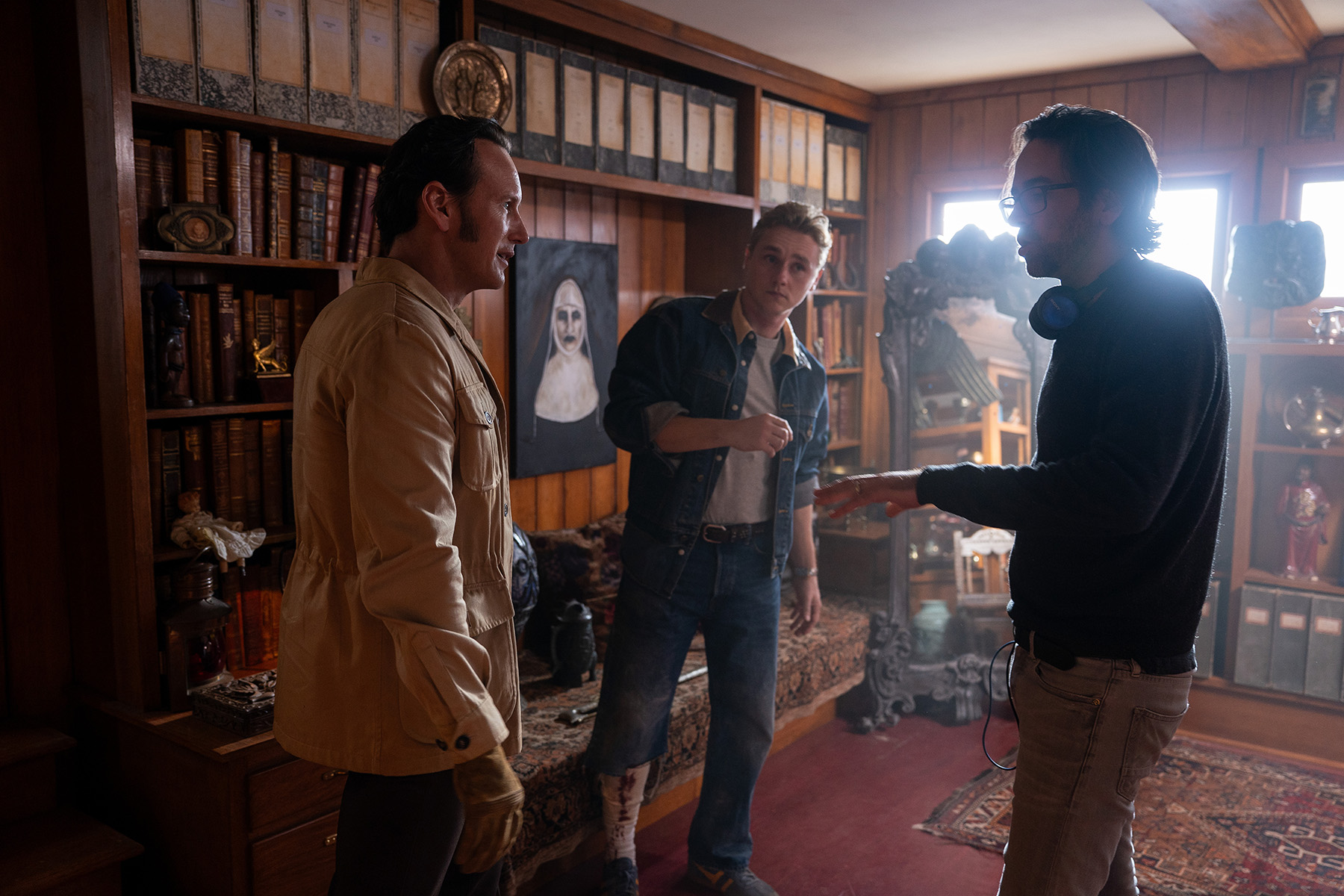
The Smurl House: An Ecosystem of Fear
But while the Warrens’ home spoke of memory and legacy, the Smurl house whispered of dread. Constructed across three stages at Bovingdon Studios, it was both duplex and battleground. Its porches, hallways, and staircases lent themselves to chaos, children darting, parents chasing, shadows lurking. Its attic, vast and wooden-beamed, became a fully immersive nightmare. Beneath its rafters lay discarded toys and furniture, while loose planks created perilous paths across beams.
Set in the 1970s turning into the 1980s, its palette was earthy: browns, greens, and golden yellows, with avocado-green refrigerators and floral wallpaper. What was once the warmth of home became the perfect camouflage for something malevolent. As the haunting escalated, the house bore scars, walls damaged, furniture worn, family members bruised and exhausted.
On Bovingdon’s backlot, the exterior came alive. Clapboard houses lined a recreated Pittsburgh street, front yards manicured, cars parked, trees swaying. And as news of the haunting spread, the street clogged with journalists, cameras, and curious neighbors, a community watching as private suffering turned public spectacle.
Every detail held authenticity. Costumes for the Smurl daughters mirrored archival photographs so closely that the young actresses bore uncanny resemblance to their real-life counterparts. Even Lorraine’s vision at the Warren sink was constructed with scientific precision: the SFX team engineered practical blood effects, bubbling and spilling through tubes and deflectors. In the basement, a set was built as a water tank to hold five inches of blood, filled and drained with laborious effort. Stunt performers braved it first, before Vera Farmiga herself plunged into the crimson flood.
SFX created new Annabelles and animatronic Suzy dolls. 15,500 liters of blood were cooked up. And for the mirror sequences, thirteen full-sized mirrors were constructed, including five enlarged “action mirrors,” 3D-printed and hand-painted until director Chaves gave his final blessing, the angelic faces blank, vacant, and terrifying.
Michael Chaves: From Skeptic to Believer
“The Smurl case was a real haunting,” Chaves explains, his voice quiet but assured. “West Pittston, Pennsylvania. It stretched from the mid-1980s into the 1990s. The Warrens were involved. The Smurls lived in a duplex, three generations under one roof. It began innocuously, during their daughter’s confirmation, a light fell. But it escalated, year after year, to levels impossible to ignore.”
For Chaves, the research was personal. “I spoke with the four Smurl sisters. Talking to them was powerful. They weren’t seeking attention. Their neighbors thought they were crazy, but the weight of it, the trauma, it was real. It still lives with them today.”
And through this, Chaves’ skepticism crumbled. “I became a believer. Not because of theatrics, but because of their honesty. These were smart, reasonable people. And the Warrens, whatever you think of them, they had an impact. They went where no one else would.”
But belief came not only from research. While filming in England, Chaves stayed at The Old Vicarage, a centuries-old house with no address, only a name. “One night,” he recalls, “I heard voices upstairs. Two men, talking clearly. I searched every room. Nothing. The voices stopped. It wasn’t burglars. I swear to God it was a haunting. I’ve dismissed these things before, but not anymore. I know what I heard.”
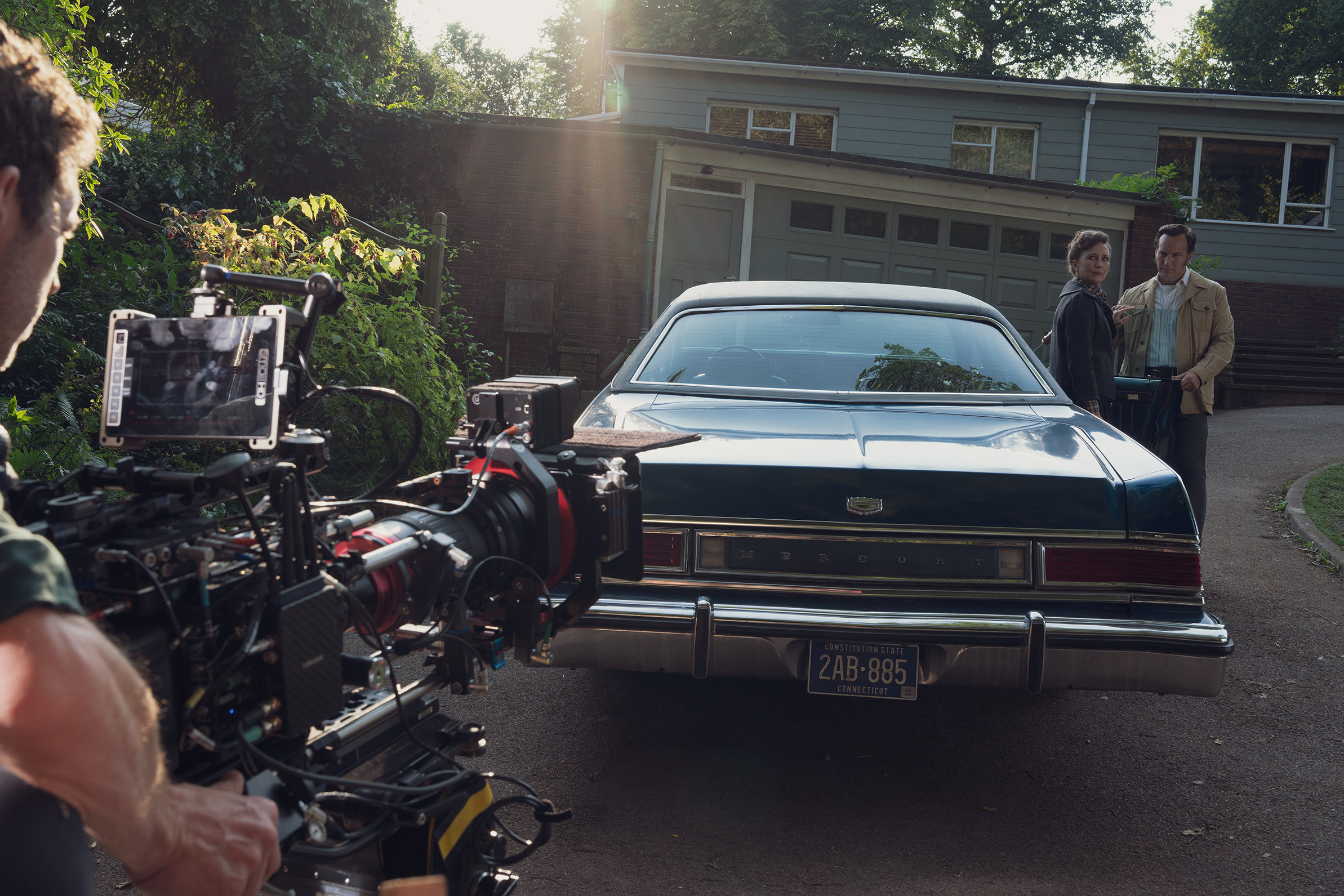
The Final Case: Saying Goodbye to the Warrens
For Vera Farmiga and Patrick Wilson, this film carries the weight of farewell. “It’s 1986,” Farmiga says. “Chernobyl. Iran Contra. The Challenger disaster. And the Smurl case.”
Patrick Wilson nods. “A good era in rock music, too.”
Farmiga smiles. “We’ve aged with these characters since 1971, from the first Conjuring. And here, we find them battle-worn. Lorraine is exhausted, Ed’s health is failing. They’re trying to step back.”
But the story will not let them. Judy, their daughter, has inherited Lorraine’s clairvoyance. For the first time, she stops running from it. “It’s like the last rites of maternity,” Farmiga explains. “Lorraine has to let go. As parents, we protect our children instinctively. But at some point, you must let them steer their own course, even into danger. That’s the hardest lesson.”
Wilson adds: “This isn’t just another case. It’s personal. Judy is at the center. And Ed and Lorraine, middle-aged now, must ask: have they done enough? Is it time to stop? Or is this one last fight worth everything?”
Farmiga leans forward, her words tinged with reverence. “The Warrens compel us because they are epic. They embody heroism, sacrifice, compassion. They remind us that love itself can be a form of light in the darkest places. That’s why audiences return. Because even as the stories grow darker, the Warrens shine brighter.”
A Farewell That Feels Like Legacy
The Conjuring: Last Rites is not just another entry in a franchise. It is a story about endings, of cases, of careers, of parental protection. It is about letting go, even when shadows loom.
Behind every scene, whether blood bubbling from a sink, mirrors shattering, or families clinging together, lies the careful work of hundreds. From costume designers muting the excesses of the 1980s, to prop-makers building haunted mirrors, to crews standing in mist and rain to capture a funeral march, the film is alive with detail.
And at its core, like any great natural story, it is about survival. The Warrens have endured monsters, skepticism, and their own frailty. In this last case, they must endure themselves: their age, their exhaustion, and the inevitability of letting their daughter take her place in the world.
As the carousel turns, as the artifact room fills with familiar relics, as Judy steps into her inheritance, one thing is certain: the Warrens’ final rites will echo long after the curtain falls.
Discover more from SNAP TASTE
Subscribe to get the latest posts sent to your email.

