



The construction site is not usually where people expect the next big interface revolution to show up. But at CES 2026, it became clear that heavy equipment is quietly entering its own AI era.
Doosan Bobcat Inc. arrived in Las Vegas with a message that felt less about machines and more about people. As jobsites grow more complex and experienced operators become harder to find, Bobcat is betting that intelligence, not just horsepower, is the key to the future of work. The company used the Consumer Electronics Show 2026 stage to introduce a tightly connected ecosystem of AI driven tools, autonomous systems, and electric platforms designed to make equipment easier to use, safer to operate, and more adaptable to real world conditions.
Rather than framing these ideas as distant moonshots, Bobcat positioned them as practical steps toward solving everyday problems. The through line across the announcements was simplicity. The goal is not to overwhelm operators with technology, but to hide complexity behind interfaces that feel natural, responsive, and supportive.
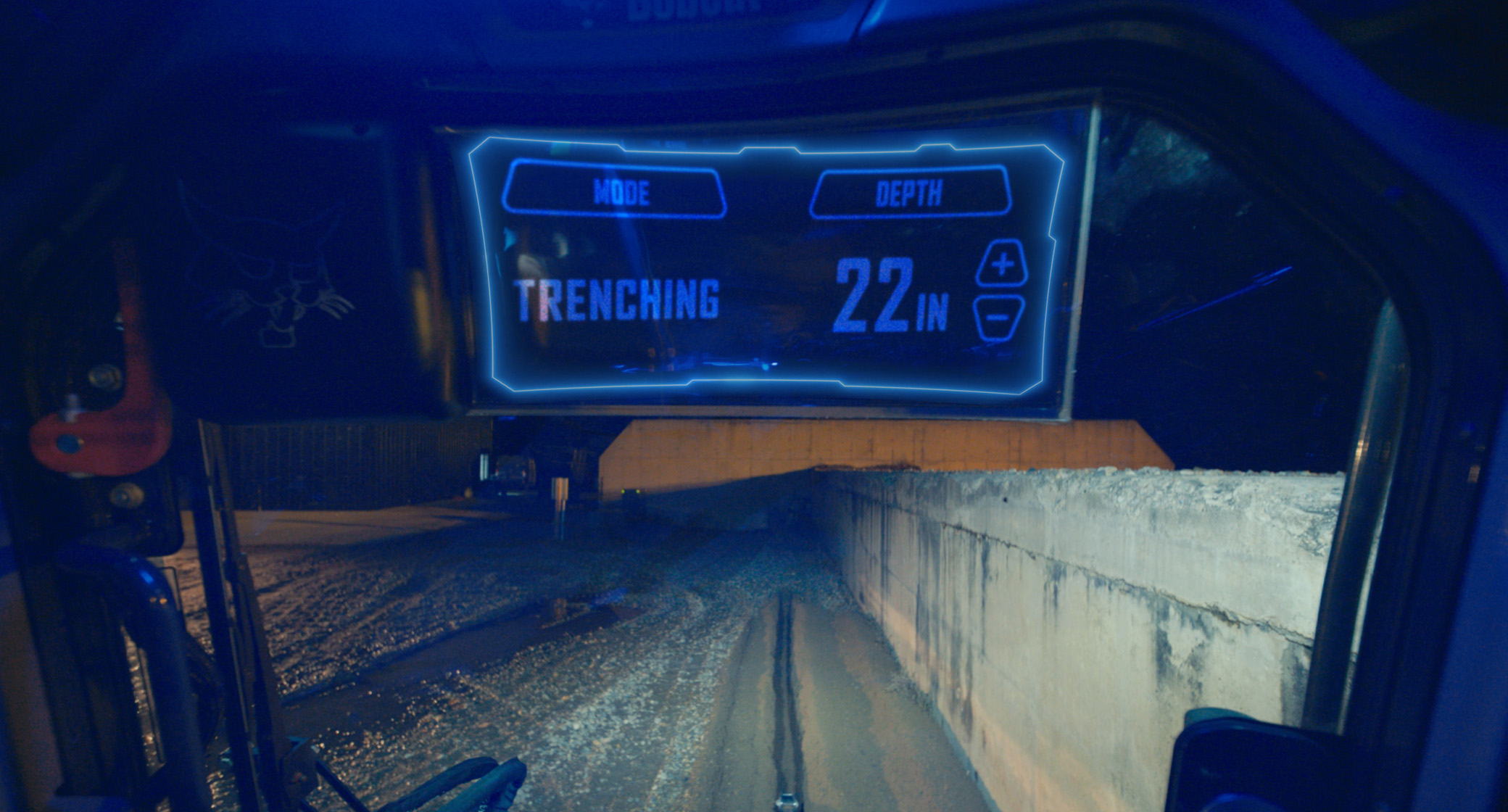
That philosophy is most visible in Bobcat Jobsite Companion, a prototype system the company describes as the first AI enabled feature built specifically for compact construction equipment. At its core, Jobsite Companion reframes the relationship between operator and machine. Instead of learning every control sequence or menu structure, operators can simply ask questions or give commands. The system responds through voice and visual prompts, adjusting attachments, recommending settings based on the environment, and automating dozens of common tasks without requiring hands to leave the controls.
What makes this approach notable is where the intelligence lives. Jobsite Companion runs entirely on the machine, powered by Bobcat’s own AI large language model. There is no dependency on cloud connectivity, which means it works just as well on a remote jobsite as it does in an urban environment. In a world increasingly defined by connected services, Bobcat’s choice to prioritize local, real time intelligence feels both pragmatic and quietly radical.
The impact is as much cultural as it is technical. By lowering the barrier to entry, Jobsite Companion makes it easier for new operators to get productive quickly, while also giving experienced professionals a way to work faster and with greater precision. It is an interface designed to transfer expertise, not gatekeep it.
Bobcat extended that same thinking beyond the cab with Service.AI, an AI powered support platform aimed at dealers and technicians. Equipment downtime is one of the most expensive pain points in construction, and Service.AI is designed to compress the gap between problem and solution. Through natural language queries, technicians can instantly access repair manuals, warranty information, diagnostic guidance, and insights drawn from Bobcat’s historical service data.
In practice, the system functions like a digital master technician, offering step by step guidance that simplifies complex diagnostics. The result is faster repairs, less guesswork, and more uptime. At a time when skilled labor shortages are affecting nearly every industry, Service.AI positions software as a force multiplier rather than a replacement.
Safety also took center stage in Bobcat’s CES showing, particularly with its prototype Collision Warning and Avoidance System. Designed specifically for compact equipment, the system uses advanced imaging radar to continuously track nearby objects, measuring their speed and direction in real time. When a potential collision is detected, the machine can alert the operator and even slow or stop automatically.
The emphasis here is subtle assistance rather than automation for its own sake. Bobcat described the system as a way to enhance awareness without adding cognitive load, and early customer feedback suggests it is already influencing purchasing decisions. In an industry where confidence on the jobsite matters, that kind of quiet reassurance can be a powerful differentiator.
If Jobsite Companion represents a new way to talk to machines, Bobcat’s Advanced Display Technology hints at a new way to see through them. The concept uses a transparent MicroLED display integrated directly into the cab door or window. Instead of glancing down at a screen, operators see critical information layered into their natural field of view.
The display can show three hundred sixty degree camera feeds, collision alerts, machine performance data, jobsite features, and real time asset tracking, all while remaining see through. It is less a screen and more an interface layer between the operator and the environment, blending digital insight with physical awareness in a way that feels borrowed from augmented reality but grounded in jobsite reality.
Looking further ahead, Bobcat used CES to showcase RogueX3, its most ambitious concept machine yet. Fully electric and autonomous, RogueX3 is built around modularity. The version on display operates without a cab and can be controlled remotely or run autonomously, but its architecture allows for extensive customization. Wheels or tracks, cab or no cab, different lift configurations, and even different power sources are all part of the design philosophy.
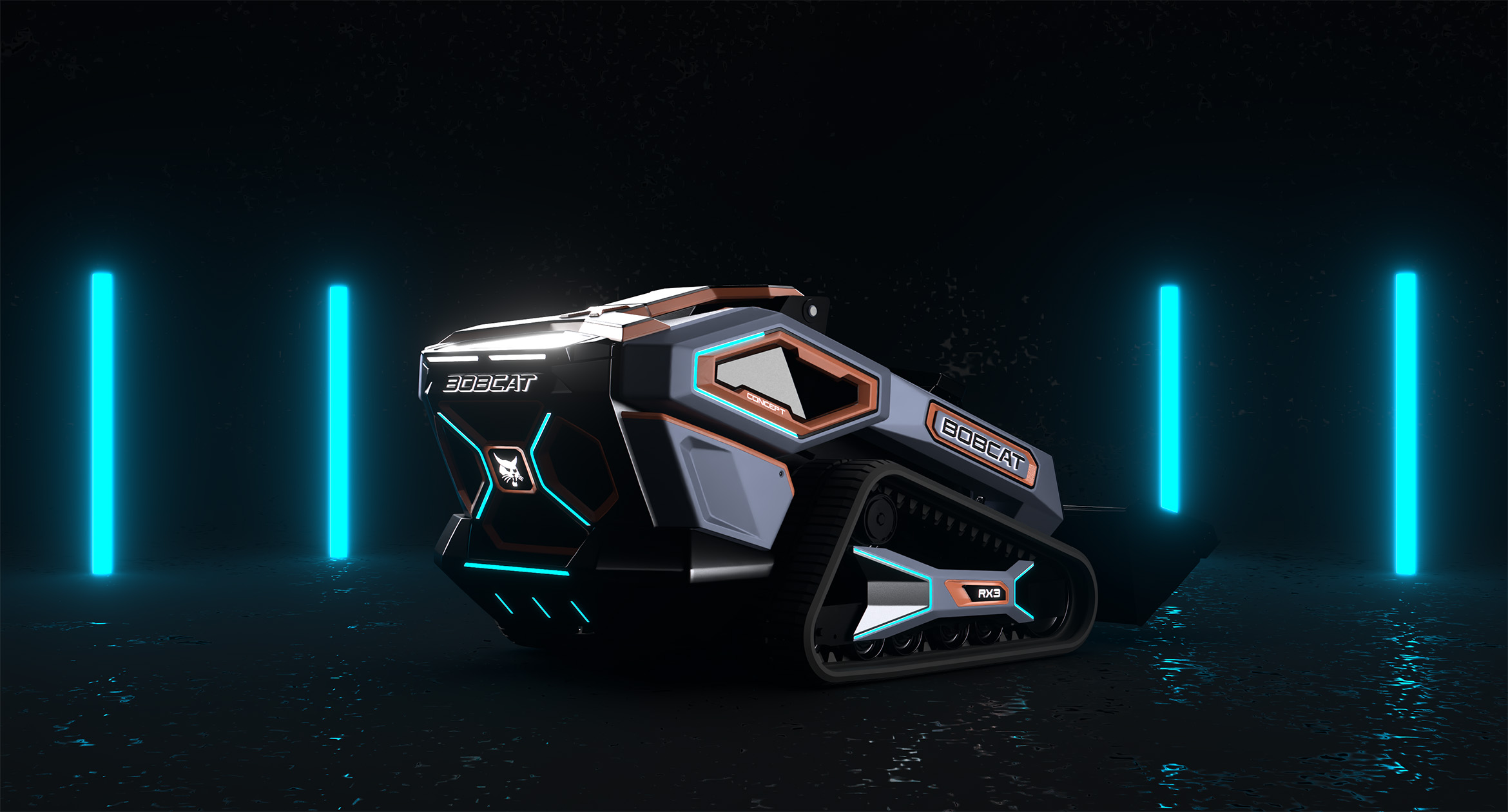
Bobcat made it clear that RogueX3 is not about locking users into a single vision of the future. Instead, it is about flexibility. The same platform could eventually support electric, hybrid, diesel, or hydrogen power, adapting to different markets and use cases. Several pending patents tied to RogueX3 suggest that many of its ideas are already feeding into future production plans.
Underpinning all of this is the Bobcat Standard Unit Pack, a modular battery system designed for the harsh realities of construction work. The stackable units are engineered to fit compact equipment, charge quickly, and survive dust, debris, and impact. By standardizing power in this way, Bobcat is laying the groundwork for an electric ecosystem that can scale across machines and even beyond its own lineup.
Taken together, Bobcat’s CES 2026 announcements paint a picture of a company treating construction equipment as a connected platform rather than a collection of standalone tools. Artificial intelligence, autonomy, electrification, and interface design are not separate initiatives here. They are pieces of a single strategy aimed at making work more intuitive and more human.
None of the technologies shown are commercially available yet, but Bobcat emphasized that several are already moving toward production. For an industry often seen as slow to change, the message was clear. The future of work is not just arriving on the jobsite. It is being designed around the people who show up there every day.