


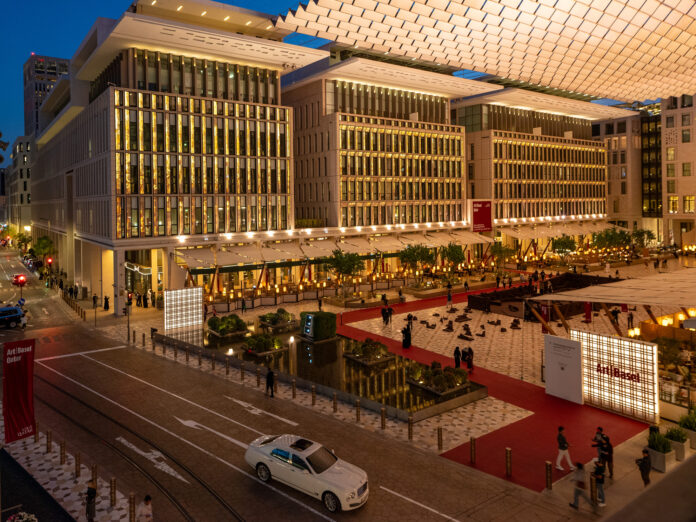

In early February, Doha became not simply a host city but a stage, as Art Basel Qatar drew to a close its inaugural edition and, in the process, articulated a new grammar for what an international art fair can feel like in the MENASA region. Set between M7 and the Doha Design District, with works unfolding across Msheireb’s streets and civic spaces, the fair operated less as a contained event than as a dispersed cultural moment, one that invited the city itself into conversation.
More than seventeen thousand visitors moved through the fair across VIP and public days, with thousands more encountering its Special Projects throughout Doha. Nearly half of the collectors and patrons in attendance came from the MENASA region, joined by audiences from Asia, Africa, Europe, and the Americas. The result was a rare density of perspectives and sensibilities, reflected in galleries’ reports of sustained dialogue with new collectors and institutions, particularly from Qatar, Saudi Arabia, the United Arab Emirates, and Europe. These encounters translated into acquisitions across a wide spectrum of price points, suggesting a market energized not by spectacle but by attention.
What drew that attention, repeatedly, were artists whose practices speak to histories of place, movement, and transformation. Demand was especially strong for work from the Middle East, North Africa, South Asia, and the Global South, with solo presentations and focused installations allowing both emerging and established voices to be encountered with depth. The collector response mirrored the tone of the fair itself, considered rather than hurried, attuned to context as much as to global relevance.
The presence of His Highness The Amir Sheikh Tamim bin Hamad Al Thani, alongside Her Highness Sheikha Moza bint Nasser, His Highness Sheikh Jassim Bin Hamad Al Thani, His Excellency Sheikh Mohammed bin Abdulrahman Al Thani, and Her Excellency Sheikha Al Mayassa bint Hamad bin Khalifa Al Thani, underscored the degree to which the fair was positioned not as an import but as a cultural platform of national and regional significance. That positioning was further reinforced by the attendance of representatives from more than eighty five museums and foundations worldwide, spanning institutions in Qatar and the MENASA region alongside major centers in Europe, Asia, Africa, and the Americas.
Bringing together eighty seven galleries from thirty one countries and territories, including sixteen first time Art Basel exhibitors, the fair’s curatorial framework resisted replication in favor of responsiveness. Regional narratives were placed at the center, yet always in dialogue with global contemporary practice. Across the halls, audiences encountered a measured interplay of Modern and contemporary work, new commissions, and large scale site responsive projects that rewarded looking slowly.
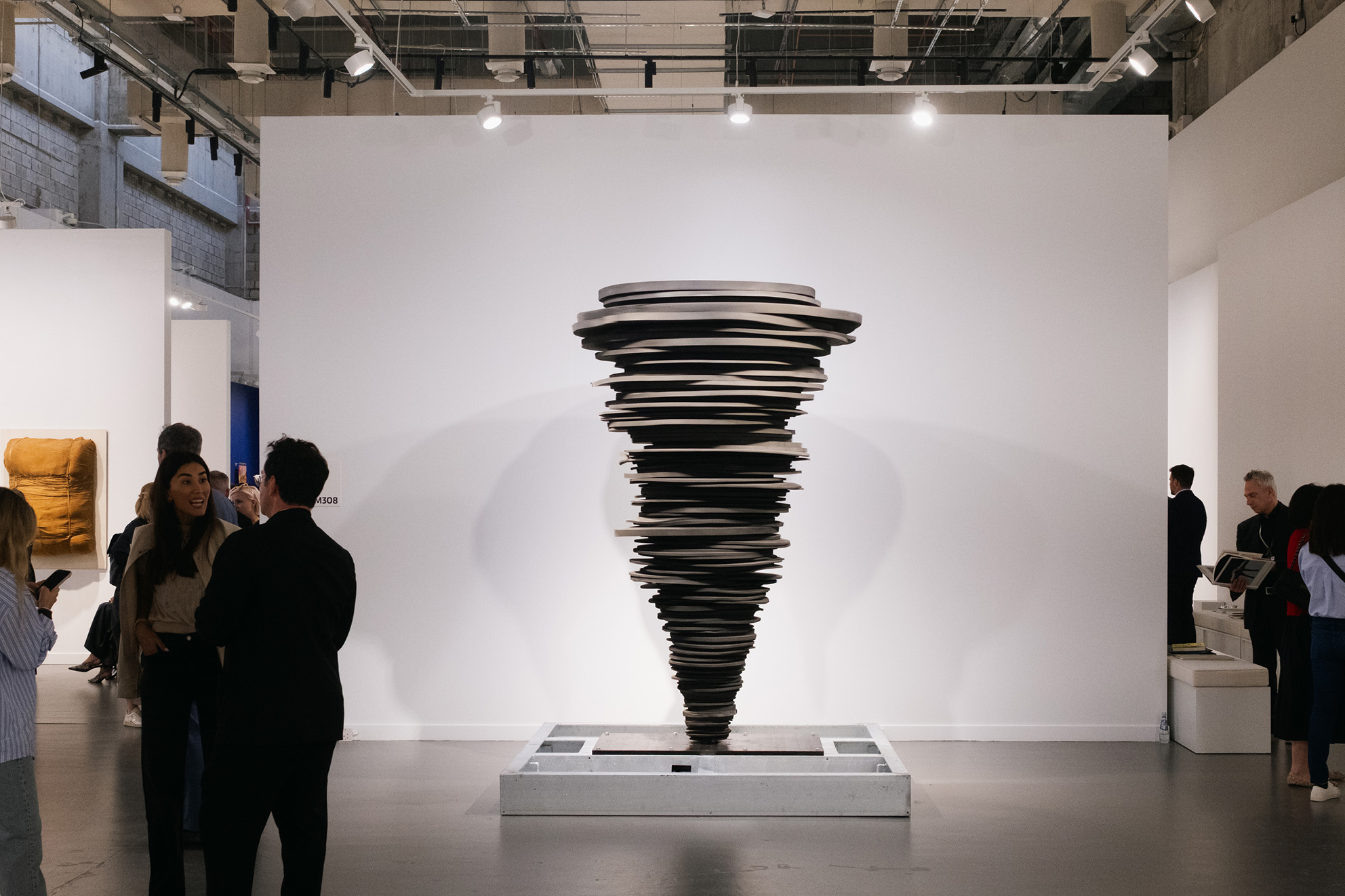
That sensibility extended beyond the exhibition spaces. Art Basel Qatar’s Special Projects unfolded across the city in the form of ten ambitious installations and performances by artists including Abraham Cruzvillegas, Nour Jaouda, Hassan Khan, Nalini Malani, Bruce Nauman, Khalil Rabah, Sweat Variant, and Rayyane Tabet. These works engaged with memory, language, identity, and transformation, allowing Doha’s urban and cultural landmarks to become part of the fair’s material vocabulary. Among them, Jenny Holzer’s SONG, projected nightly onto the façade of the Museum of Islamic Art following its unveiling on February two, emerged as a quietly monumental gesture, folding poetry, architecture, and public space into a shared nocturnal experience.
Conversation, both literal and implied, became another defining register of the week. The launch of the Conversations program in collaboration with Qatar Creates Talks brought nearly two thousand five hundred attendees to M7 across three days, marking the highest average attendance per session in the program’s history. Panels featuring artists, curators, collectors, and cultural leaders traced the contours of the region’s evolving arts ecosystem and its global entanglements, favoring reflection over declaration.
As the fair unfolded alongside exhibitions and initiatives across the Museum of Islamic Art, Mathaf, the National Museum of Qatar, ALRIWAQ, and the Fire Station, Art Basel Qatar felt less like a temporary arrival than a continuation, building on an already active cultural landscape while opening it outward. Presented with Visit Qatar as lead partner, the inaugural edition ran from February five to seven, two thousand twenty six, with VIP days preceding it earlier in the week. Dates for the next edition will be announced in due course, though the impression left behind suggests a platform already thinking beyond its first chapter.