




CES is famous for showing products that feel more like a promise than a purchase. You see dazzling prototypes, glossy concept videos, and hardware that will not ship for a year, sometimes longer. CES 2026 still had plenty of that, but it also delivered a refreshing category of announcements: devices with real prices, real release windows, and in some cases, a buy button already live. If you are trying to plan what to upgrade in 2026, those are the gadgets that matter because they move from trade show fantasy to your home, desk, and daily routine on an actual timeline.
This list focuses on products that are either already available or have confirmed 2026 availability windows from the brands themselves. Some are big purchases, some are small upgrades, but all share the same trait: you can realistically buy them this year without waiting for a vague “someday” roadmap.
Aqara Smart Lock U400 is the smart lock that finally feels frictionless
Smart locks have always sounded simpler than they are. The hardware is easy, but the experience often gets bogged down in phone unlocking, unreliable geofencing, and compatibility drama. Aqara’s Smart Lock U400 stood out at CES 2026 because it leans into ultra wideband for precise “unlock as you approach” behavior, and pairs that with Thread and Matter so it can work across the major smart home platforms without forcing you into a single ecosystem. Aqara lists the U400 as available now through a broad set of retailers, and the typical US price is $269.99. What makes the U400 feel like a 2026 product is the way it stacks practical entry methods without making the lock feel complicated. It supports Apple Home Key, fingerprint unlock, PIN codes, NFC, app control, voice assistants, and a physical key for backup. It is also built for outdoor conditions with an IP65 rating, includes a gyroscope based auto locking feature, and uses a rechargeable battery that Aqara says can last up to six months per charge. Under the hood, Aqara says the lock uses NXP secure ultra wideband and NFC solutions, which matters because it signals this is not just a software trick, it is hardware level secure ranging intended for real access control.
If you are looking for a smart home upgrade that makes daily life easier immediately, a lock is one of the few categories that can actually deliver that. The U400 is also a good snapshot of the broader 2026 smart home trend: standards based connectivity, better local wireless, and fewer weird workarounds just to make a door behave like a door.
Solos AirGo V2 makes AI glasses feel like a real consumer product
Smart glasses have been stuck in a loop for years. They either look normal but do not do much, or they do a lot but look like tech cosplay. Solos AirGo V2 is not the final answer to glasses, but it is a strong sign that the category is becoming buyable for regular people. The AirGo V2 launched at CES 2026 with a $299 price, and it is positioned as a camera enabled pair of glasses designed for multimodal assistance, meaning it can work with voice plus what it can see through the camera. On the spec side, the AirGo V2 includes a 16MP camera and supports photo capture plus full HD video. It also leans into power management in a way most glasses have ignored, using a modular SmartHinge battery design that allows you to swap the temples so the glasses can keep going while one set charges. Solos also described a charging case with a 1,100mAh battery planned for release in Q2 2026.
Why this matters for 2026 is that the product approach feels grounded. Instead of promising a wearable phone replacement, these glasses aim to be a hands free tool that can help in moments when pulling out a phone is annoying, like quick translation or identification tasks. If you are curious about the category, AirGo V2 is one of the few CES 2026 wearables that is already priced like consumer tech and not like a developer kit.
IKEA Matter devices are the simplest smart home shopping you will do all year
The smartest smart home trend at CES 2026 was not a single device. It was IKEA treating smart home gear like normal home goods. IKEA’s expanding Matter support is important because it changes who smart home tech is for. When you can buy sensors, remotes, and bulbs where you buy shelves and lamps, the whole category starts feeling less like a hobby and more like a default option.
IKEA announced a lineup of 21 smart home products built around Matter, including new bulbs, motion sensors, air quality sensors, humidity sensors, and water leak sensors, plus smart plugs and new remotes. In the US, IKEA has indicated its smart remotes and sensors will be available starting in January 2026, with smart bulbs expected to follow in April 2026.
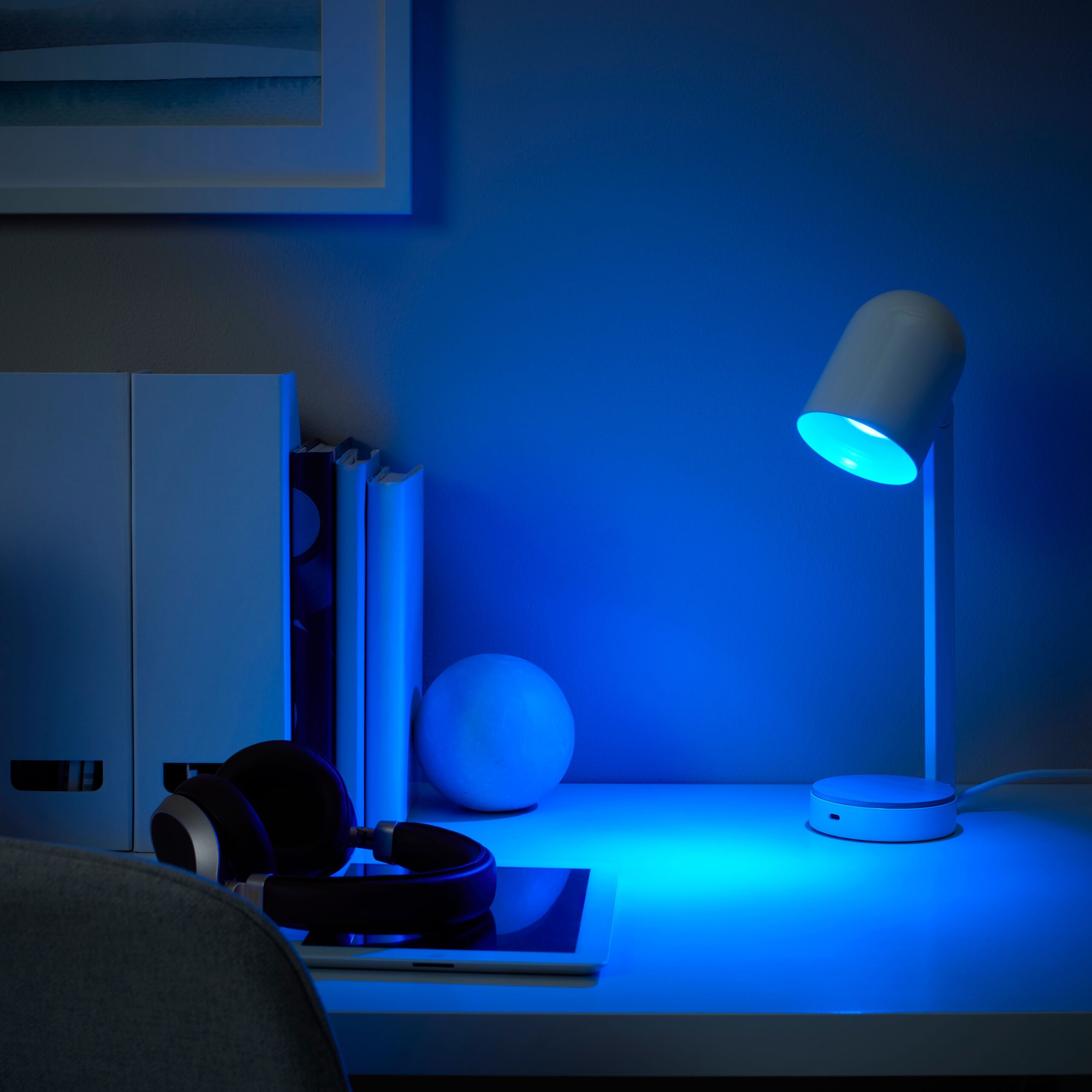
That split matters because it gives you a practical path to start building a system now and expand later, rather than waiting for a single big launch.
There are also specific products you can plan around. IKEA’s Varmblixt donut lamp has been updated with Matter support and preset color transitions via the Bilresa remote, and it unlocks more color options through the DIRIGERA hub and IKEA app. IKEA also announced a $149.99 Varmblixt pendant lamp coming in April 2026 that lets you tune the warmth of its white light from cool to candle like.
The takeaway is not that these lamps are revolutionary, it is that the buying experience is becoming straightforward. If you want to make your home feel smarter in 2026 without turning it into a technical project, this is the most practical place to start.
Be Quiet’s new PC gear is the rare CES drop with real dates attached
PC components are often some of the most buyable announcements at CES because they ship faster than big consumer devices, and Be Quiet brought unusually clear timing. If you are upgrading a PC in early 2026, the company announced multiple products with near term release dates across cooling, power, and peripherals. The Dark Perk mouse is a good example of CES hardware that will actually show up on shelves quickly. It is scheduled for release on February 3 and comes in ergonomic and ambidextrous versions, using a PixArt PAW3950 sensor rated up to 32,000 DPI, with 8,000Hz polling, Omron optical switches, and up to 110 hours of wireless battery life.
These are the kinds of specs that matter if you care about responsiveness and consistency, and the release date matters even more if you are building a setup soon.
Be Quiet also announced new power supplies with concrete timing. Its Power Zone 2 1,200W variant is set for January 27, and its Pure Power 13 M 1,200W variant is set for February 10, both supporting ATX 3.1 and PCIe 5.1. And for people who want a flashier build without sacrificing practicality, the Light Loop AIO cooler arrives April 14 in 240mm and 360mm sizes, with a 2.1 inch LCD display and updated control software.
The key CES 2026 signal here is that PC upgrades continue to be one of the easiest ways to buy into the year’s new tech without waiting months for a phone or TV cycle.
Intel Core Ultra Series 3 laptops will start hitting shelves this month
If you are planning a new laptop in 2026, CES is usually where you learn whether to buy now or wait. Intel made that decision easier by putting firm dates on the first wave of Core Ultra Series 3 systems. Intel says preorders for the first consumer laptops powered by Core Ultra Series 3 began January 6, 2026, and systems will be available globally starting January 27, 2026, with additional designs coming through the first half of the year.
This matters because it turns the CES chip announcement into a real buying window, not a vague promise. It also signals how quickly the 2026 laptop market will shift, since many manufacturers will build new designs around this platform through spring. If you need a laptop immediately, the late January availability gives you a clear cutoff. If you can wait a few weeks, you will start seeing the first real wave of new systems rather than last year’s configurations with slight spec bumps.
Lenovo’s creator monitor is one of the clearest February buys
Monitors are a category where CES announcements can translate directly into something you can buy without waiting for an entire product cycle. Lenovo’s Yoga Pro 27UD 10 is one of the most straightforward examples. Lenovo lists the monitor at an estimated starting price of $1,499.99 with expected availability from February 2026. The Yoga Pro 27UD 10 is positioned as a creator focused 4K OLED display, and Lenovo has been highlighting color accuracy and a workstation style feature set rather than just gaming specs. Lenovo also publishes support documentation and a product listing that point to a packaged setup that includes a USB4 cable and a camera accessory, which hints at how the company expects people to use it as a desktop hub for laptops. Another report from CES describes it as using a QD OLED panel, which is a meaningful detail for people who care about color volume and HDR behavior.
If you want a CES 2026 purchase that does not require switching ecosystems or learning a new interface, a monitor like this is a clean upgrade. It is also the kind of product where the tech details are not marketing fluff. Resolution, panel type, connectivity, and calibration directly shape your daily experience.
The small Lenovo accessories that will probably become your most used gadgets
Not every smart purchase in 2026 needs to be a major device. CES 2026 included a set of small, practical accessories with clear pricing and near term availability, and those are often the things you end up using the most. Lenovo’s CES lineup includes a Combo 2 in 1 Power Bank priced at $149.99 with expected availability in February 2026, plus a Multi port USB C 100W GaN Charger priced at $74.99 with expected availability in April 2026. Lenovo also listed its 900 Wireless Low Profile Mechanical Keyboard and Mouse with expected availability in March 2026, with the keyboard priced at $129.99 and the mouse at $49.99.
These are not glamorous, but they are deeply 2026 purchases because they solve modern problems. A 100W GaN charger that can consolidate your travel kit is a quality of life upgrade. A combo power bank that is designed to be part of your daily carry matters more than another flashy gadget you forget to charge. If you are trying to be strategic with spending this year, accessories like these are often the highest value upgrades because they improve every device you already own.
What to watch next
The pattern across these buyable CES 2026 gadgets is simple. The most practical announcements were not the ones promising the far future. They were the ones offering clear availability, standards based compatibility, and specs that translate into real daily benefits. Locks are getting more reliable because ultra wideband and Thread reduce friction. Smart home gear is getting easier because Matter and mainstream pricing change the buying experience. Wearables are becoming buyable when they focus on a few useful tasks and take battery life seriously. PC gear remains the fastest pipeline from CES to your home, because the industry is built around shipping parts on tight schedules.