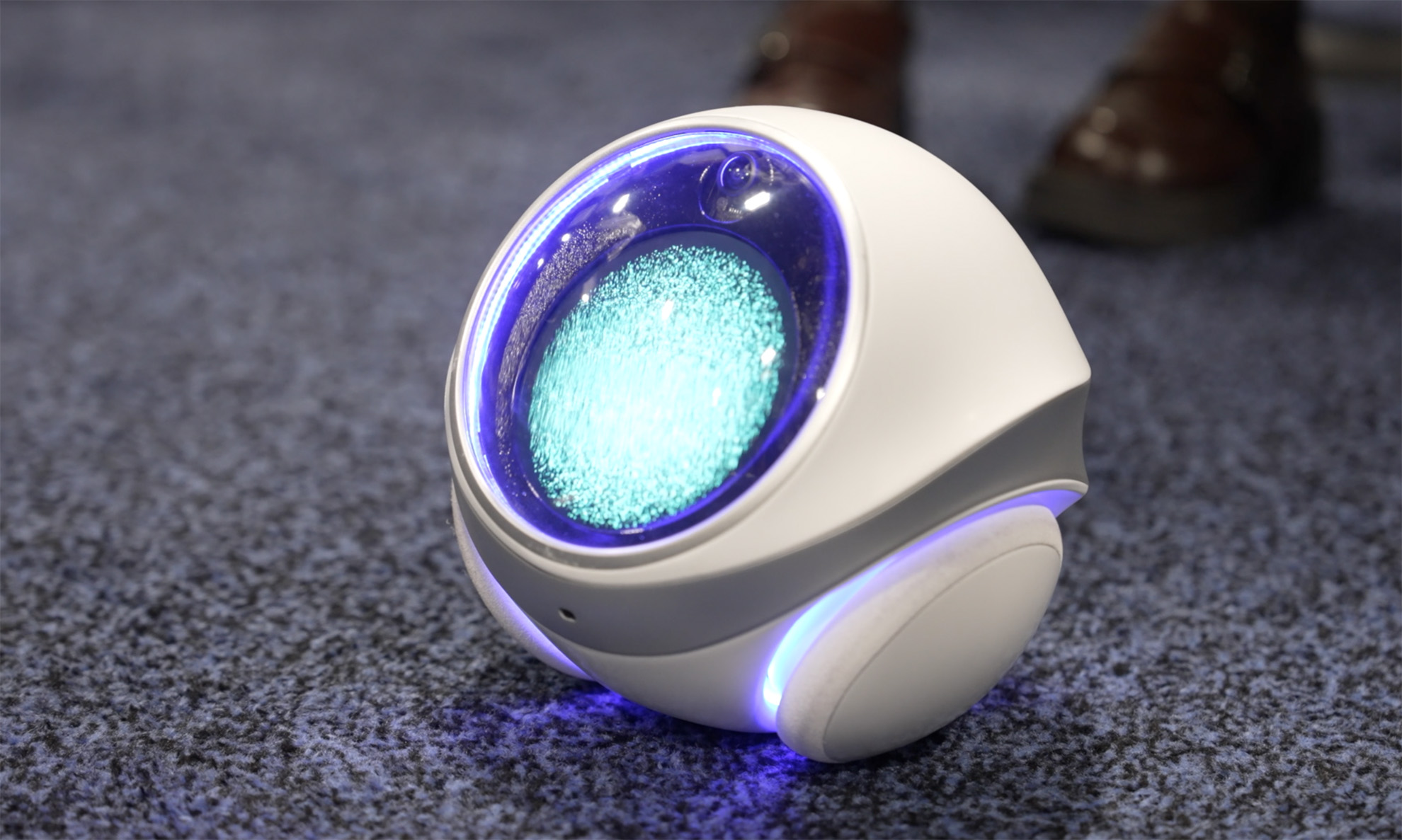
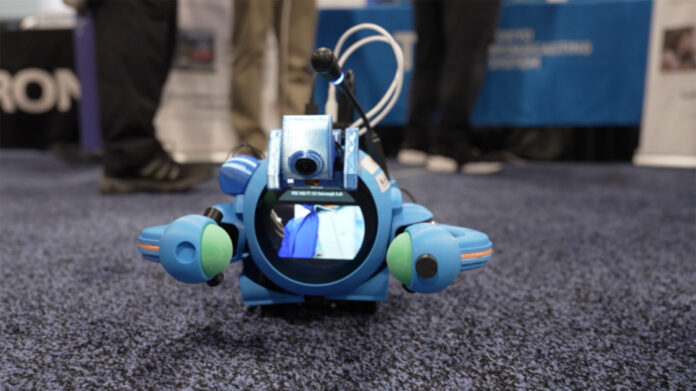

Hundreds of journalists arrived in Las Vegas this weekend already knowing that CES 2026 would be massive. What CES Unveiled offered instead was something more focused and, in many ways, more revealing: a tightly packed preview of how consumer technology is quietly reshaping everyday life before the biggest booths even light up.
Held Sunday at Mandalay Bay Convention Center, CES Unveiled gave roughly 4,000 media members an early look at a curated slice of the thousands of products that will dominate show floors across the city this week. The official Consumer Electronics Show, produced by the Virginia based Consumer Technology Association, opens Tuesday, but Unveiled remains the industry’s unofficial temperature check. It is where patterns begin to emerge, not through blockbuster announcements, but through repetition.
CES 2026 runs through Friday and is expected to draw around 140,000 attendees, making it Las Vegas’ second largest annual convention. The event is open exclusively to technology professionals, but Unveiled is where the broader story of the show starts to take shape. This year’s preview made one thing clear: the future of consumer tech is less about spectacle and more about subtle intelligence woven into daily routines.
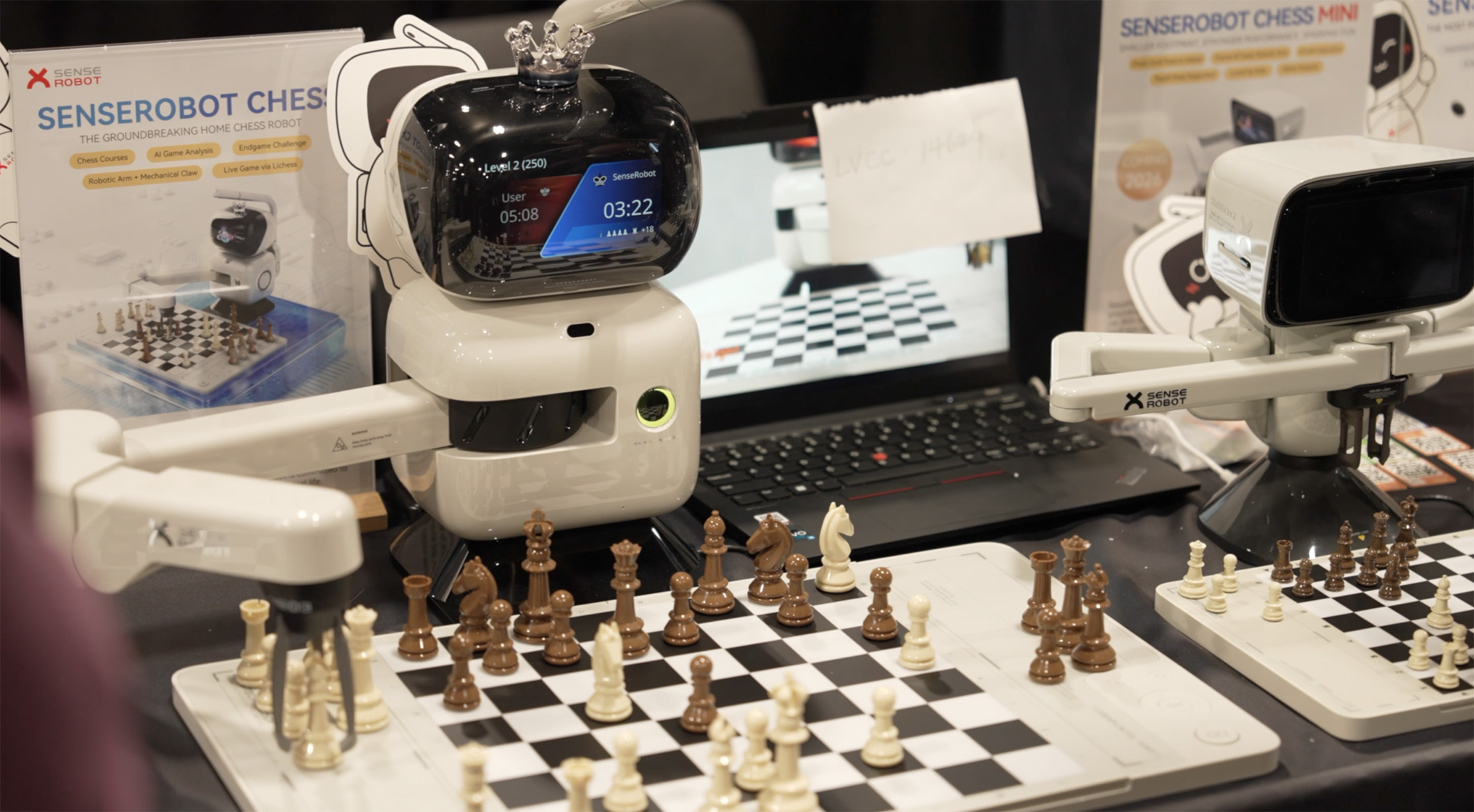
CES Unveiled functions as a kickoff mini show, spotlighting smaller companies and startups rather than headline grabbing launches from industry giants. The show floor reflected that purpose. Booths were packed with near ready consumer products alongside experimental ideas that feel like early drafts of tomorrow’s norms. Robotics, smart home devices, health tech, personal electronics, and AI assisted gadgets dominated the room.
Companion style robots appeared repeatedly, as did AI powered household devices designed to fade into the background rather than demand attention. Updated approaches to spatial media, wearable assistance, and smart infrastructure hinted at a broader industry shift. Instead of chasing raw performance numbers, many exhibitors emphasized context, autonomy, and comfort. The goal increasingly appears to be technology that works around people rather than forcing people to work around it.
This year also marks the first CES to fully take advantage of the Las Vegas Convention Center’s $600 million renovation, which brings the North, Central, and South halls up to the same standard as the $1 billion West Hall expansion. While Unveiled took place off site, the scale of what is coming looms over every preview.
One of the most consistently crowded booths belonged to Tombot, a Santa Clarita based company focused on robotic companionship with a specific healthcare mission. Its product, Jennie, a lifelike robotic Labrador puppy, was not positioned as a novelty or a futuristic pet replacement. Instead, Tombot framed Jennie as a healthcare device designed to support people living with Alzheimer’s disease and related forms of dementia.
The robotic puppy is built to provide comfort and interaction, but it also aims to monitor behavioral patterns associated with sundowning, a condition that can cause confusion and agitation later in the day. The result is a robot that sits at the intersection of emotional support and clinical intent.
What made Jennie stand out was not an attempt to convincingly masquerade as a real animal, but the degree of responsive realism engineered into the experience. The robot uses a dense network of motors and sensors to create expressive, emotionally readable behavior. Jennie tracks faces with her eyes, responds to movement, and adjusts to changes in lighting. Capacitive touch sensors allow her to react to petting, microphones enable sound recognition, gyroscopes help maintain orientation, and internal systems work together to produce behavior that feels attentive rather than mechanical. It is less about illusion and more about presence.
Nearby, CubicSpace offered a very different kind of wow moment. The company introduced CubicScreen, a screen protector for the iPhone embedded with an optical filter that enables glasses free 3D viewing. Paired with a companion app, CubicScreen allows users to view spatial photos and videos with a depth effect reminiscent of the Nintendo 3DS.
This is not the kind of 3D that leaps off the screen. Instead, it adds dimensionality behind subjects, giving images a sense of space and immersion without requiring additional hardware. Eye tracking plays a role in maintaining the effect as users move or zoom within images. While the illusion can occasionally falter, it generally snaps back quickly, creating an experience that feels surprisingly natural once your eyes adjust. It is a reminder that spatial media does not always need a headset to feel compelling.
Robotics at CES Unveiled extended well beyond companions. WIRobotics showcased its WIM S wearable walking assist robot, a lightweight robotic exoskeleton designed to support mobility for seniors, people with limited movement, and workers who need endurance or musculoskeletal assistance.
Attendees were able to wear and walk with the device during the preview, reinforcing its emphasis on real world usability rather than abstract promise. First released in South Korea in 2025, WIM S represents a refined iteration of the company’s broader WIM series. The device features a lighter, more compact form factor, with design changes informed directly by user feedback. Assistive responsiveness and overall comfort were clearly priorities.

WIM S supports four walking modes Air, Hiking, Care, and Aqua allowing it to adapt to daily walking, rehabilitation, outdoor activity, and strength focused exercise. The WIM platform is already in use across multiple regions including Korea, Mainland China, Japan, Italy, and the Netherlands. Related models have earned CES Innovation Awards across robotics, accessibility, aging tech, and digital health categories over the past three years, underscoring the growing legitimacy of wearable robotics as a consumer category.
CES Unveiled also featured familiar names returning with refreshed ideas. Pebble, one of the earliest smartwatch pioneers, resurfaced with products that lean heavily into restraint rather than excess. Alongside its previously announced Core models, the company showcased the revived Pebble Round smartwatch, featuring a circular color e paper display and an ultra thin profile designed for weeks of battery life. Step tracking and basic health features remain, but the emphasis is clearly on longevity and simplicity.
Pebble also introduced the Index 01, a smart ring style voice recorder worn on the finger. Rather than attempting to replace a smartwatch, the device functions as a discreet recording button that syncs with a nearby iPhone. Like Pebble’s watches, battery life is a central selling point, with the company claiming the ring could last up to two years on a single charge.
Health technology remained a strong theme. Withings previewed the Body Scan 2, its latest smart scale, positioned as far more than a weight tracking device. Each roughly 90 second scan captures over 60 biomarkers, ranging from weight and body composition to blood oxygen levels, metabolic metrics, and hypertension alerts. The data feeds into the Withings app and can integrate with Apple Health, reflecting the continued convergence of consumer devices and personal health ecosystems. Design wise, the scale pairs tempered glass with a full color display and a retractable handle, reinforcing its premium positioning.
Interoperability and standards were equally prominent. Xthings showcased a new lineup of Matter compatible security devices, including several smart locks and a camera designed to work over Power over Ethernet. The Ultraloq Bolt Mission, previously shown, is now approaching shipment, while newer models add palm scanning and latch style support. The devices also support the Matter Open Standard for contactless entry, signaling a continued push toward platform agnostic smart home infrastructure.
Cleaning robotics continued their steady evolution. Roborock introduced new versions of its Q Revo and flagship robot cleaners, offering both spinning mop and Sonic Mop configurations. The Sonic Mop version adds stronger vibration for more aggressive cleaning, while an extending side pad allows the robot to clean directly along walls. The updated Rock Dock features a refreshed two tone silver design and uses hotter water internally to clean returning robots more effectively.
Accessories and infrastructure had their moments as well. Hyper introduced a modular external storage enclosure for Mac users that relies on USB 4 instead of Thunderbolt, enabling up to 80 gigabits per second of throughput. The enclosure supports a wide range of NVMe drives and includes optional external power support for higher performance media. Built from aluminum with a tool free design and a protective silicone cover, it reflects a growing interest in modular, user configurable hardware.
Audio delivered one of the more unexpected highlights. The Opsodis 3D speaker looks unassuming at first glance, but quickly reveals itself once sound starts playing. Despite its compact size, the speaker produces an immersive spatial effect, with audio appearing to move beside, behind, and around the listener. The experience is less about volume and more about placement, challenging assumptions about what is required to achieve convincing spatial audio in a living room setting.
Many products focused on small but meaningful quality of life improvements. Govee showed off its Nugget Ice Maker Pro, addressing common complaints around capacity, noise, and usability. The machine features a quieter operation, a larger ice bin and water reservoir, and a magnetic scoop stored directly on the unit. A soft interior light activates when the door opens, making the experience feel more thoughtful and refined.
Belkin demonstrated a customizable screen protector system that allows users to design etched patterns, text, or logos online. The engravings remain visible when a device screen is off but disappear when the display is active, blending personalization with minimalism.
Niche innovations rounded out the preview. Allergen Alert introduced a portable testing device designed to detect food allergens from small samples in about two minutes, aiming to reduce anxiety for people with severe allergies. Birdfy showcased a prototype hummingbird feeder called Hum Bloom, equipped with a 4K camera capable of capturing up to 120 frames per second slow motion video. The device uses AI to identify more than 150 hummingbird species and includes design features like leak prevention and ant protection. It is a product that feels hyper specific and yet deeply aligned with the growing creator and nature tech crossover.
CES Unveiled does not attempt to define the show. Instead, it sketches the outlines. What emerged this year was a vision of consumer technology that feels increasingly human scale. Less obsessed with spectacle and more interested in blending quietly into daily life. As CES 2026 unfolds across Las Vegas, these early signals suggest a future shaped not by single headline grabbing devices, but by an ecosystem of thoughtful tools designed to support how people already live.