



When Netflix introduced Cashero (캐셔로), it was not positioned as a flashy, universe-building superhero series. Instead, it was framed as a grounded and contemporary K-drama where heroism comes with a financial cost. For fans of Korean dramas, Cashero stands out not only for its unusual premise but also for the intentional way it was developed, cast, and produced.
From Webtoon to Screen
Cashero is adapted from the Kakao webtoon of the same name created by Team Befar, made up of Lee Hoon and No Hye-ok. The original work gained attention for its sharp social satire, imagining a world where a superhero’s strength depends on how much cash he physically carries. The Netflix adaptation preserves this central rule. The more money the hero has on hand, the stronger he becomes, and every act of heroism literally spends that money.
Rather than expanding the concept into a large fantasy universe, the drama focuses on everyday reality. This creative decision aligns with Netflix Korea’s recent strategy of grounding high-concept ideas in familiar social pressures such as debt, housing, and financial insecurity.
Creative Direction and Writing
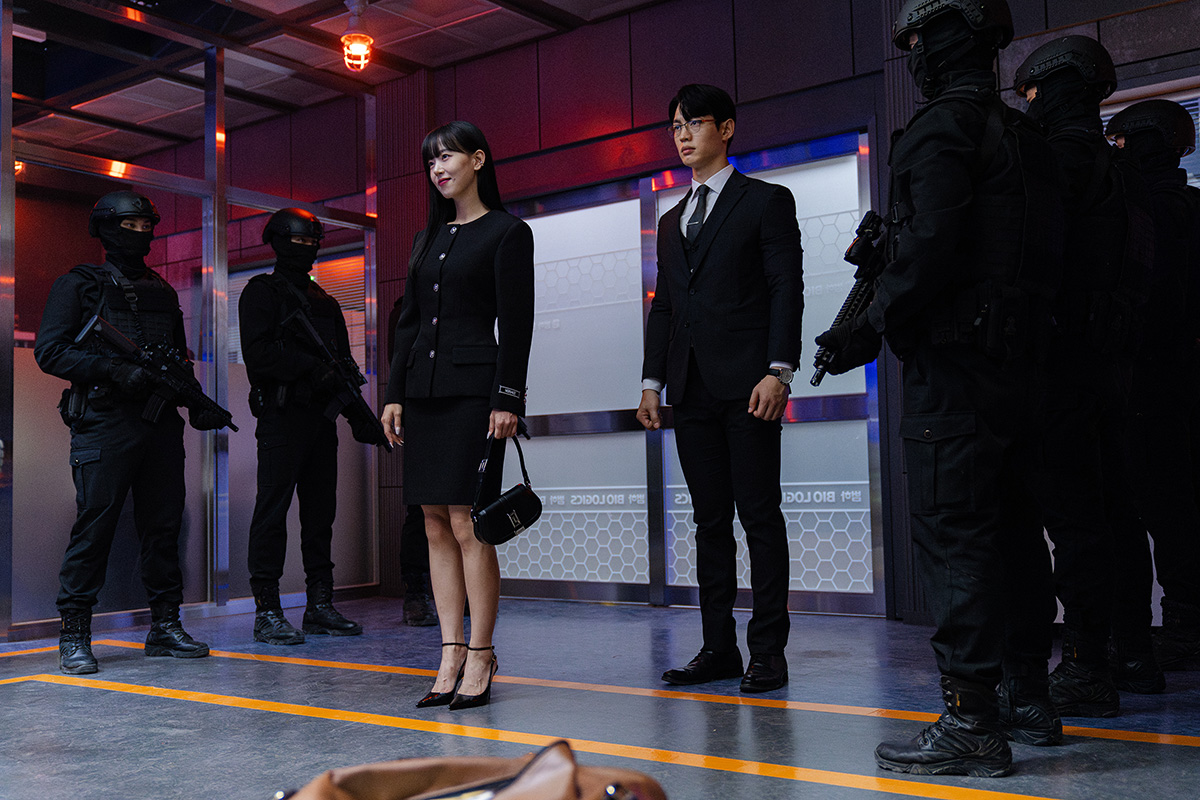
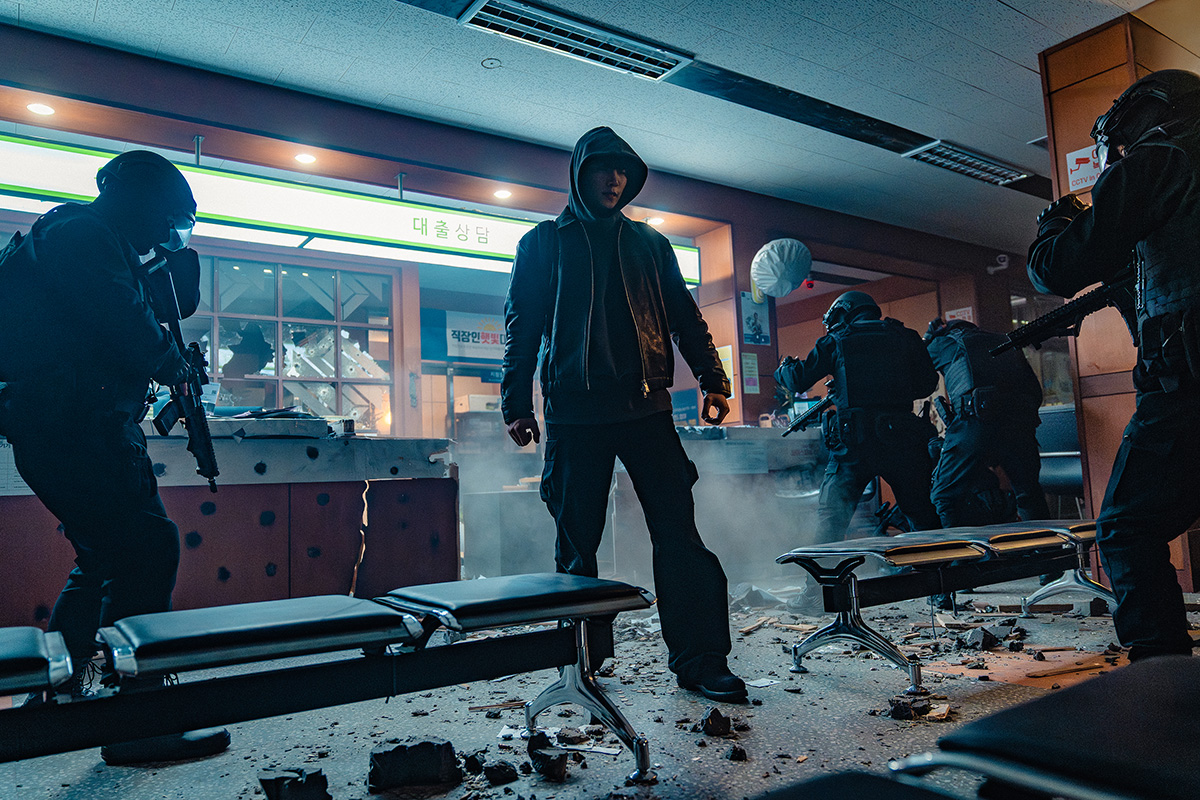
The series is directed by Lee Chang-min and written by Lee Jane and Jeon Chan-ho, all of whom are officially credited by Netflix as creators. At Netflix Korea’s “Next on Netflix 2025” presentation, Lee Chang-min explained that Cashero was designed to avoid a Marvel-style tone. His goal was to keep the story close to reality, allowing the superhero elements to feel almost uncomfortably plausible.
This philosophy shaped the production. Action sequences are meant to serve character and theme rather than spectacle, reinforcing the idea that power always comes with consequence.

Casting and Character Design
The lead role is played by Lee Jun-ho, who portrays Kang Sang-ung, an ordinary civil servant with modest dreams such as owning a home and achieving financial stability. Lee Jun-ho’s restrained acting style supports the drama’s grounded tone and helps sell the emotional weight of the character’s choices.
His partner, Kim Min-suk, is played by Kim Hye-jun. Her character is practical and numbers-driven, often calculating the real cost of heroism. This dynamic reinforces the show’s core theme that moral decisions are inseparable from economic reality.
The supporting cast expands the concept further. Kim Byung-chul plays a character whose powers are activated by alcohol, while Kim Hyang-gi portrays a telekinetic whose abilities depend on calorie intake. These rules were revealed early in the production process, suggesting that character mechanics were embedded in the scripts from the beginning.
Production Companies and Format
Industry listings consistently credit SLL and Drama House Studio as the main production companies behind Cashero, with Netflix serving as the exclusive distributor. The series was produced as an eight-episode season, reflecting Netflix Korea’s preference for concise and tightly structured storytelling.
Production Timeline and Release
Netflix officially confirmed Cashero in April 2024, announcing both the project and its principal cast at the same time. Throughout 2025, the drama was positioned as a major year-end release. A press conference was held in Seoul shortly before its global premiere on December 26, 2025, with the director and main cast in attendance.
Behind the scenes, Cashero was never marketed as a visual effects showcase. Its production narrative consistently emphasized theme and relatability over scale. By focusing on financial pressure as the true antagonist, the series presents a form of heroism that feels uniquely modern and distinctly Korean.
For K-drama fans, Cashero represents a growing trend in Korean storytelling where genre innovation is used to explore real social anxieties. It asks a simple but unsettling question. What happens when saving others means risking your own future, one bill at a time?
