



At 8,848 meters above sea level, where the air thins and the world curves beneath the horizon, Jim Morrison stood on the summit of Mount Everest’s north face, not to conquer it but to descend it. Four hours and five minutes later, he carved his name into the history of exploration as the first person ever to ski the Hornbein Couloir, a narrow chute of ice and shadow long considered the most coveted unclaimed descent in ski mountaineering.
For Morrison, one of the world’s foremost ski mountaineers, the moment was not a victory in isolation. It was a promise kept, a dream once shared with his late partner Hilaree Nelson, to whom he dedicated the feat. Nelson, a trailblazing explorer and National Geographic Adventurer of the Year, had died three years earlier on Manaslu, another Himalayan giant they had summited together. Morrison’s descent was both a tribute and a continuation, a way to finish a story that began with two and ended with one.
On October 15, 2025, as the sun began to dip behind the high peaks of Tibet, Morrison clicked into his skis and dropped into the Hornbein Couloir, tracing a line through 2,760 vertical meters of the planet’s most unforgiving terrain. He arrived at Camp One, nearly six kilometers above sea level, at 7:45 p.m. China Standard Time, exhausted, elated, and utterly alone. No one before him had ever succeeded in skiing down the Hornbein Couloir’s direct north face. Many had tried. None had returned with the full descent.
The Hornbein Couloir, first climbed in 1963 by American mountaineers Thomas Hornbein and Willi Unsoeld, remains one of the most formidable faces in alpinism, a channel of steep ice and shifting snow that slices through Everest’s northern wall. Fewer than a dozen climbers have stood atop it since its first ascent. Morrison’s was the first to descend it on skis.
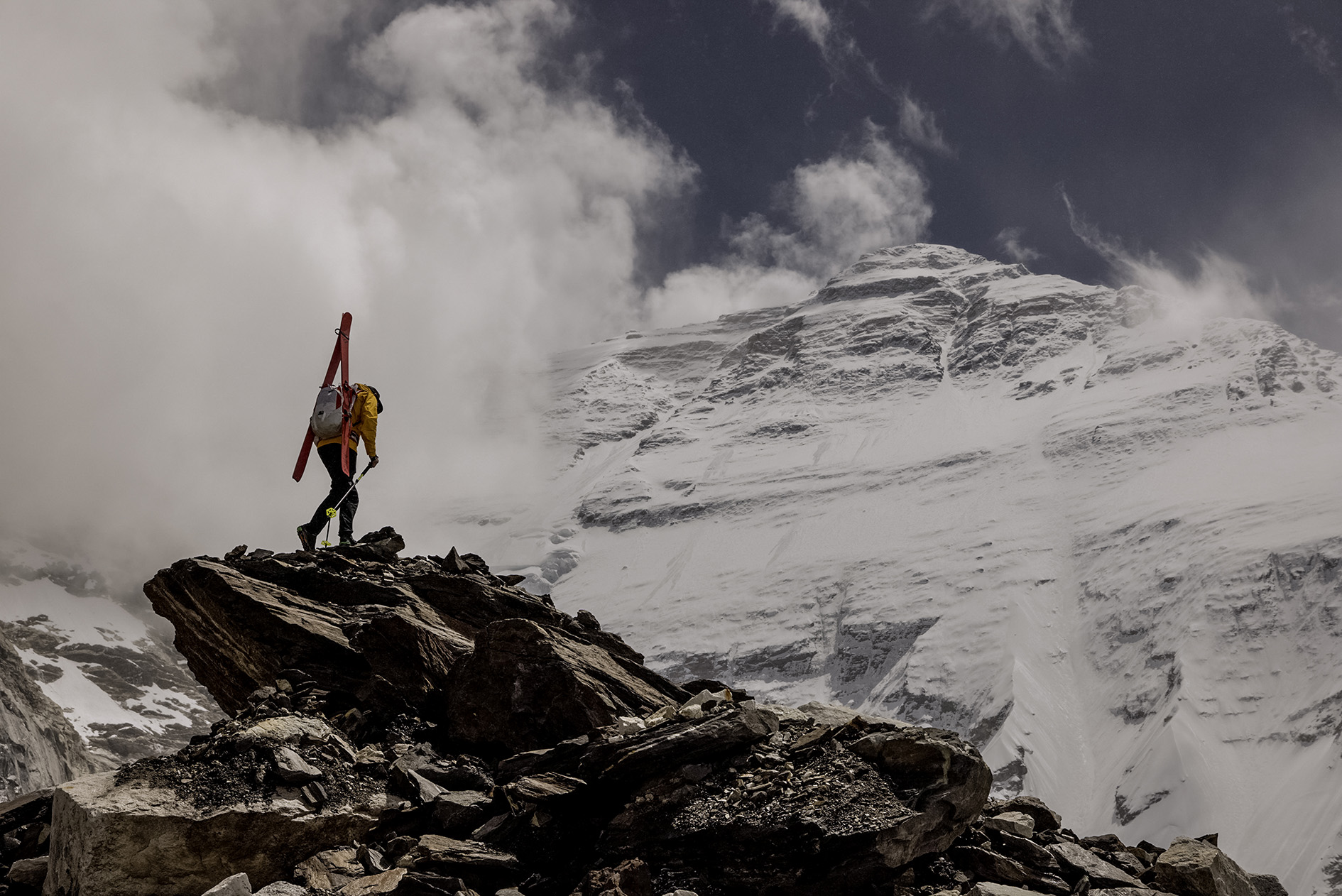
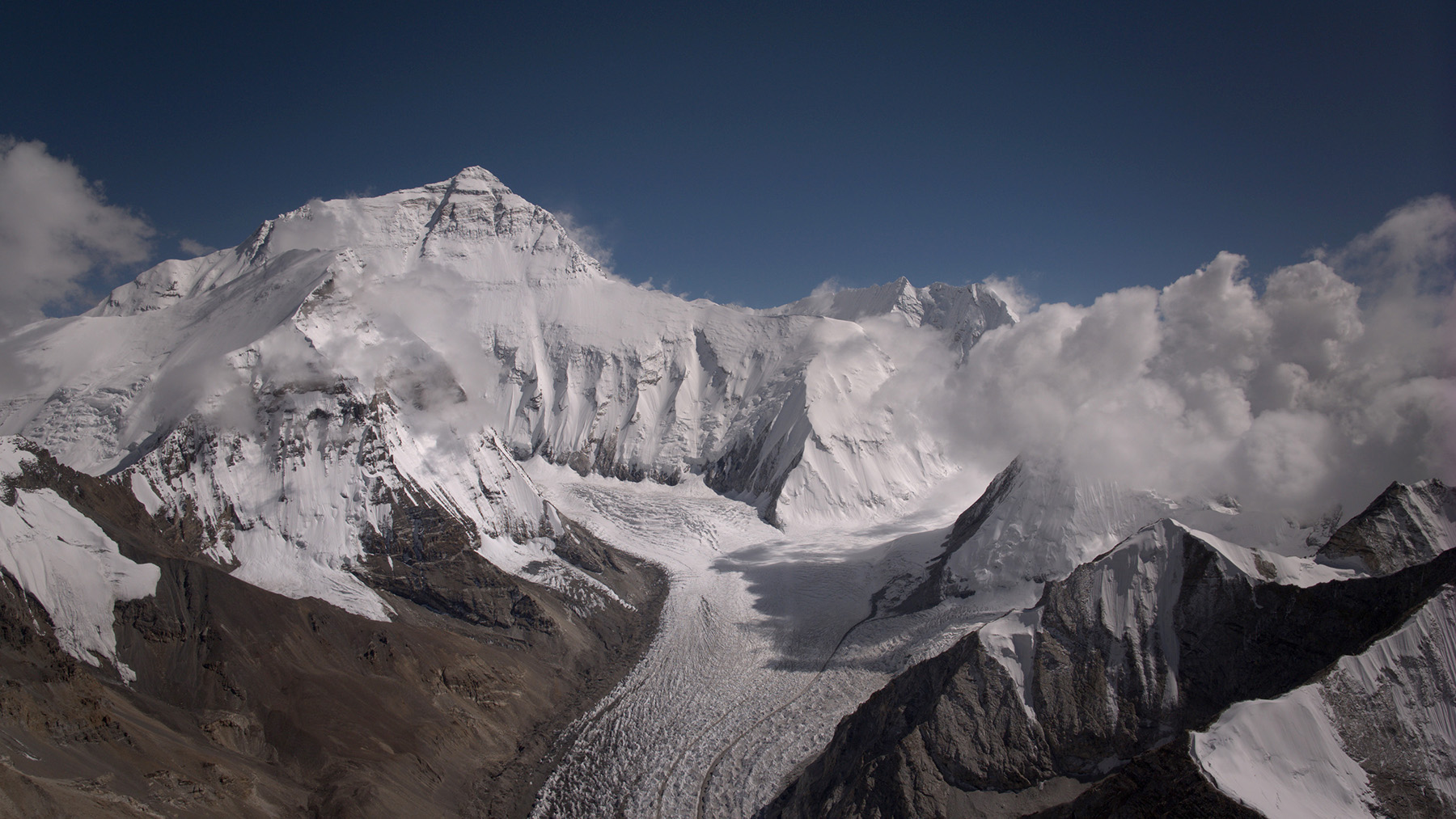
His expedition began at China’s North Base Camp, where the Rongbuk Glacier winds toward Everest’s icy shoulder. From there, Morrison and his team, including climber and filmmaker Jimmy Chin, Erich Roepke, Pemba Sharwa Sherpa, Esteban “Topo” Mena, Carla Pérez, and others, climbed the direct 9,000-foot wall of the north face. The team moved methodically through thin air and deep cold, carrying not only gear but the weight of history. When they reached the summit, the others began their descent on foot. Morrison stayed behind, preparing to ski into the unknown.
“Finishing this climb was overwhelming and deeply personal,” he said afterward. “Hilaree’s spirit and energy were a galvanizing force. I hope what we accomplished honors her and the love for these mountains we shared.”
The journey was filmed by Oscar and BAFTA-winning directors Chai Vasarhelyi and Jimmy Chin, whose 2018 documentary Free Solo redefined the visual language of adventure. Their upcoming film Everest North (working title) will chronicle Morrison’s ascent and descent, not as a tale of conquest but as a meditation on loss, obsession, and the human will to continue. The film, produced by Academy Award winner Shannon Dill and supported by National Geographic Documentary Films, captures both the spectacle and solitude of the descent: the glint of sun on ice, the sound of skis slicing silence, the ghost of a partner gone.
For Vasarhelyi, the project is not merely a record of physical achievement. “Our film is really a story of love and humanity and what defines us,” she said. “Jim’s accomplishment is extraordinary, but the heart of it lies in the years of dedication and sacrifice it took to reach that point.”
Morrison and Nelson’s names are already woven into the lore of modern mountaineering. In 2018, they became the first team to ski from the 8,516-meter summit of Lhotse, the world’s fourth-highest mountain, a descent many had deemed impossible. Their partnership, both personal and professional, redefined what was possible on skis at extreme altitude. When Nelson was killed in 2022, Morrison’s world was fractured, but his devotion to their shared dream remained. The Everest expedition became his way of honoring her and of transforming heartbreak into movement.
National Geographic Documentary Films, known for stories that capture the edge of human experience, has joined forces once again with Vasarhelyi and Chin to bring the project to life. The film will premiere in theaters before debuting on National Geographic and Disney+, promising a visceral experience of both mountain and man.
In the thin air of Everest’s north face, Morrison’s ski descent was less about adrenaline than about meaning. It was the culmination of years of grief, training, and endurance, a silent dialogue with the past written in the snow. On that immense canvas of ice and stone, his turns drew not just a path downward, but a line connecting love, loss, and the unrelenting pull of the human spirit toward the unknown.

