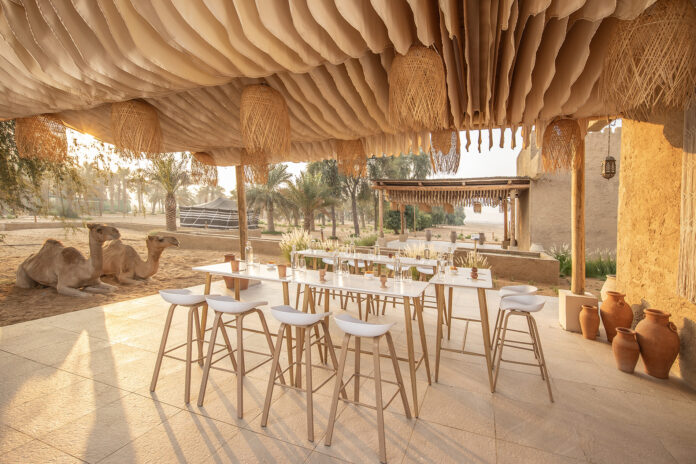
In the heart of the Liwa Desert, where endless dunes stretch across the Empty Quarter, Qasr Al Sarab Desert Resort by Anantara offers travelers an invitation to slow down and embrace a more intentional pace of life through Ezba, the resort’s cultural and education center. Ezba emerged from a dedication to preserving and celebrating Emirati Bedouin heritage while advancing environmental conservation, sustainability, and community engagement, principles inspired by the vision of the UAE’s founding father, His Highness Sheikh Zayed bin Sultan Al Nahyan.
The Liwa region itself holds profound historical significance. It has long been a cradle of Bedouin life, a vital stop on caravan routes, and the gateway to the Rub’ al Khali, or Empty Quarter, one of the largest uninterrupted sand deserts in the world. Here, generations of desert dwellers mastered survival and harmony with the harsh environment, cultivating traditions and skills that continue to resonate today.
Ezba embodies these traditions through four key pillars: history, culture, nature, and immersive experiences. The center aligns with the global slow travel movement, offering guests a tangible connection to the customs and lifestyles that shaped the UAE. Visitors can weave traditional crafts, participate in Arabic coffee rituals within a vibrant majlis, and witness firsthand the rhythms of desert life, each moment reflecting the enduring spirit of the Bedouin.
More than a cultural hub, Ezba exemplifies sustainable desert living. Conservation, education, and guest engagement are seamlessly integrated into the resort experience. Every activity and design choice—from immersive workshops to landscaping—supports the regeneration of desert ecosystems, protects native species, and encourages responsible interaction with the environment.
Sustainability is practiced daily. The resort’s greenhouse produces over 4,400 pounds of fresh herbs, vegetables, and dates annually, creating a true farm-to-table experience while minimizing the need for outside sourcing. A comprehensive composting program diverts approximately 75,000 pounds of organic waste each year, transforming it into nutrient-rich mulch that sustains the desert landscape. Solar energy powers many operations, groundwater conservation ensures judicious resource use, and regenerative landscaping revitalizes native flora, enhancing biodiversity.
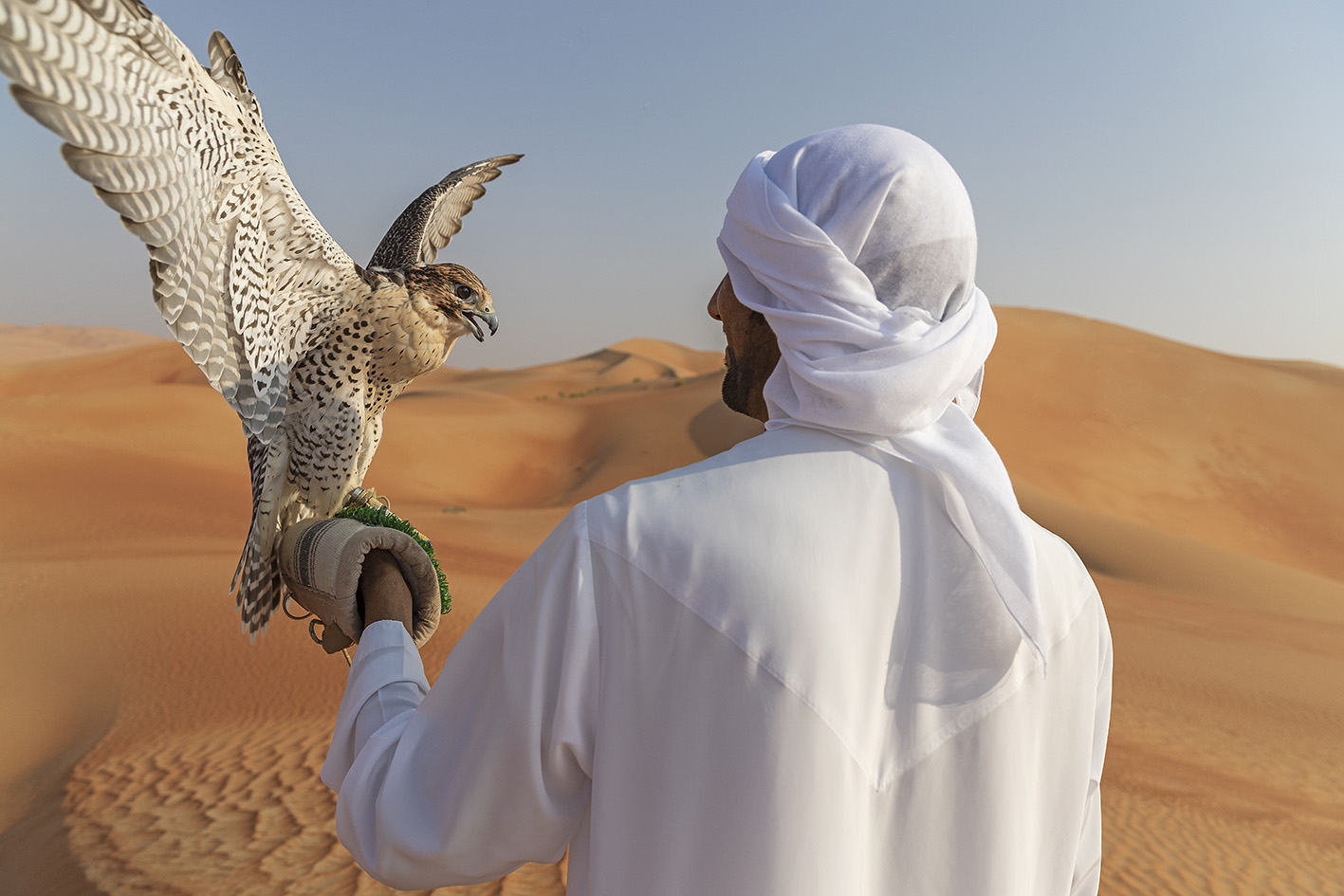
Wildlife is integral to the Ezba narrative. Camels, saluki dogs, and falcons illustrate the Bedouin’s historical reliance on these animals for survival and companionship. Visitors gain insight into how these species shaped desert life and continue to hold cultural significance. Beyond the resort, Ezba contributes to conservation by providing a safe habitat for endangered species such as the Arabian oryx and Arabian gazelle, supporting government initiatives to reintroduce these animals into the wild and bolster the desert’s fragile ecosystem.
Annually, more than 12,000 guests engage with Ezba’s programs, discovering traditional crafts such as Sadu weaving and intricate Talli embroidery under the guidance of local artisans. These experiences cultivate a deeper understanding of the Bedouin’s harmonious relationship with nature, demonstrating that ancient practices remain strikingly relevant in contemporary sustainability.
In the vast stillness of the Empty Quarter, Qasr Al Sarab and Ezba stand as an oasis where tradition meets innovation. Travelers are invited to slow down, reconnect with the natural world, and witness how life thrives when nurtured by respect for heritage, commitment to the environment, and hope for future generations.