



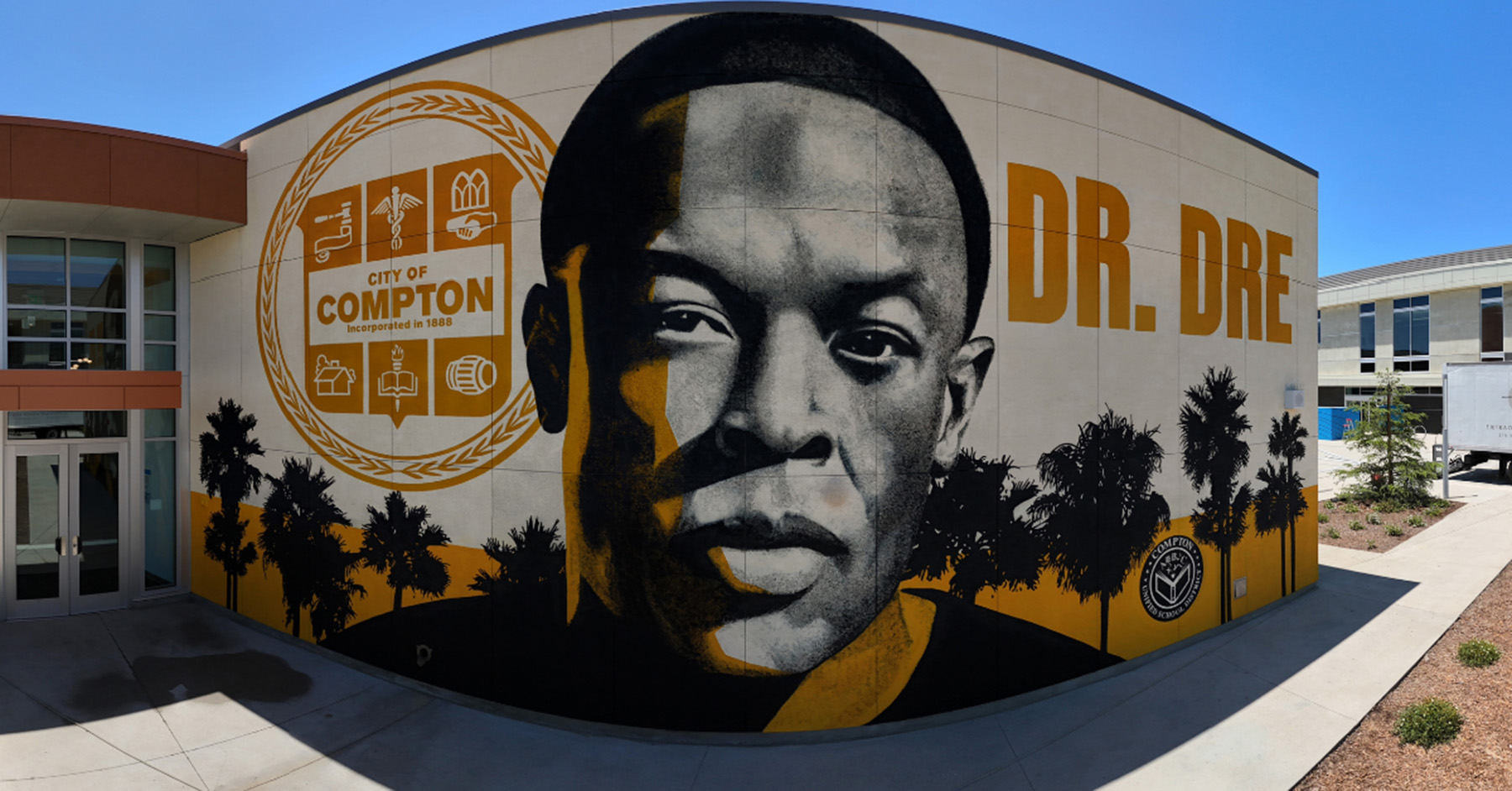
Public art plays a significant role in shaping the cultural and visual identity of cities worldwide. Unlike artwork displayed in galleries, public art exists in shared spaces accessible to all, with the power to transform everyday environments into places of meaning and connection. Murals, as a prominent form of public art, serve as large-scale canvases that tell stories, celebrate community, and reflect social values. They engage passersby, encourage dialogue, and often become landmarks that define neighborhoods.
In Los Angeles, a city known for its diversity and rich street culture, murals have a long history as tools for expression and activism. From early graffiti and Chicano mural movements to contemporary commissioned projects, murals continue to evolve by combining artistic creativity with community involvement and urban development.
Within this vibrant context, Pulling Paint Murals has established a distinct presence. Founded by longtime collaborators David Kaul and Will Cassayd-Smith, this Los Angeles-based studio is recognized for its thoughtful, hand-painted public art that blends storytelling, design, and community context.
The two first connected more than ten years ago while working in advertising. What began as a side project between creative peers gradually grew into a full-time practice. Kaul brought experience as a former graffiti artist and creative director, while Cassayd-Smith contributed expertise in brand strategy and production. Together, they formed a studio built on craftsmanship, clarity, and collaboration.
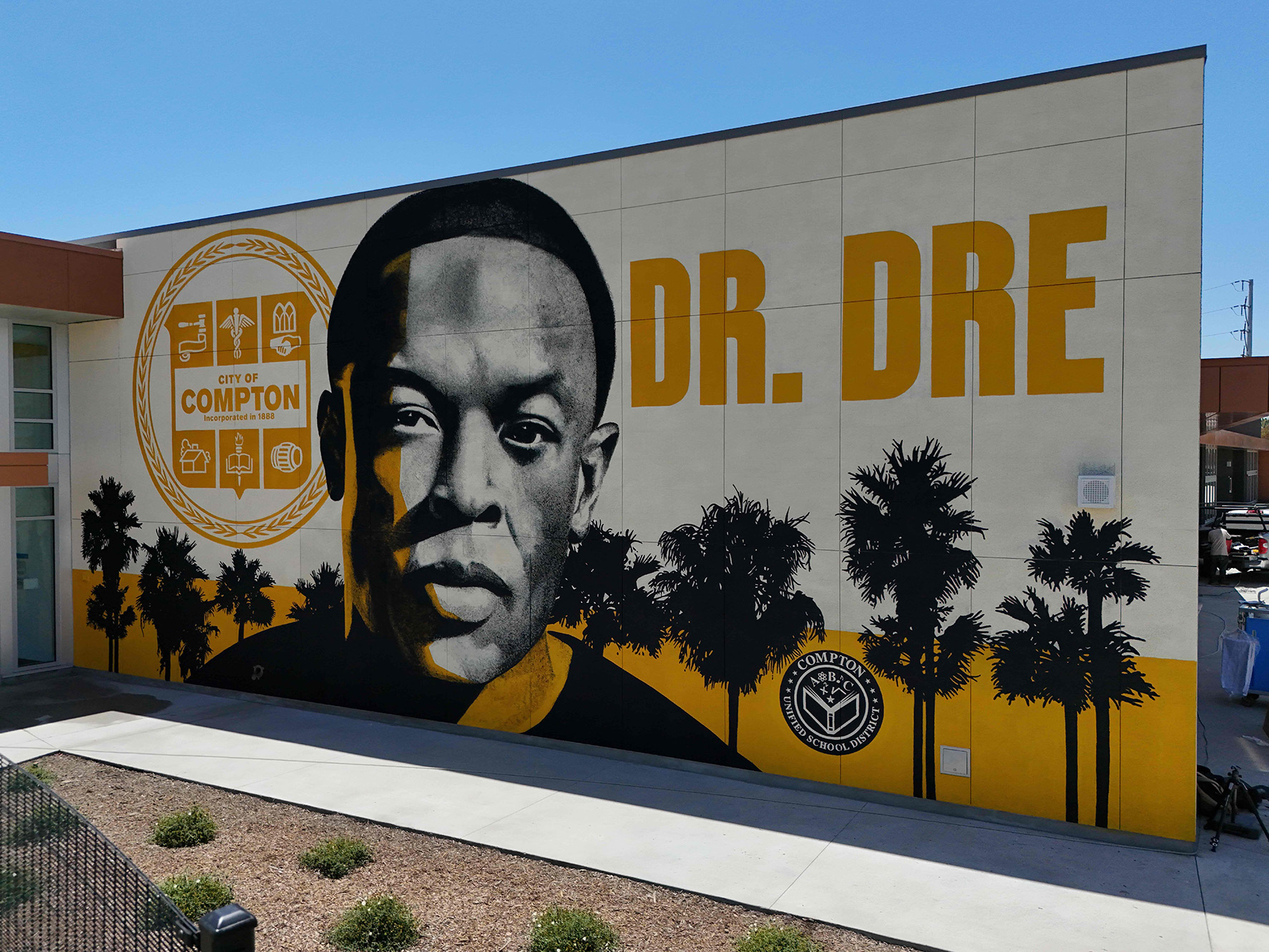
Pulling Paint’s portfolio covers a broad spectrum of projects, ranging from commercial partnerships to grassroots initiatives. Their murals appear throughout Los Angeles and beyond, created in collaboration with organizations such as Rivian, Parks Project, Sneakertopia, and community institutions like The Whole Child and the Whittier LGBTQ Center. Whether amplifying local stories or supporting national brands, each piece reflects their belief that public art should serve a lasting purpose.
Rather than viewing walls as empty surfaces to fill, Pulling Paint approaches them as integral parts of a larger environment. Their process involves close dialogue with clients, neighborhoods, and the physical surroundings. The resulting artwork feels integrated rather than imposed, enhancing both the space itself and the experience of those who engage with it.
While Pulling Paint’s murals are marked by bold compositions and strong visual impact, their success often lies in subtler details—the way light interacts with the surface, how colors echo the landscape, and the emotions that linger long after the paint has dried. Their analog, hand-crafted approach remains resonant in an increasingly fast-paced, digital world.
From transitional housing centers to city-supported cultural spaces, their work has become a recognizable part of Los Angeles’s public art landscape. At the core of their mission is a commitment to creating pieces that reflect, support, and strengthen the communities they inhabit.
Co-founders David Kaul and Will Cassayd-Smith share their perspective on the creative process, guiding vision, and lasting impact behind Pulling Paint Murals.
Question: Your work often starts in dialogue with the space and community. How do you balance your creative vision with the voices and needs of the people who live in those neighborhoods?
David Kaul: Los Angeles presents a really unique opportunity: the neighborhoods and communities are so diverse and different versus some other cities, every locale has its own artistic vibe. We, of course, stay as informed as we can around the context of each area where we paint, but it provides a huge amount of creative freedom and flexibility in what we put on a wall and what it means to that part of the city. Murals take time to create, so we’re physically immersed in that space for quite a while around each project. This gives us a chance to really engage with that community in a tangible way. We talk with people who live there, eat the food, learn the geography, and just generally embed ourselves into the community for the duration of our project. It’s just a really rare and cool thing to be able to do.
Question: Pulling Paint champions permanence and analog craftsmanship in a digital age. What role do you think physical, hand-painted murals play in shaping a city’s cultural identity today?
Will Cassayd-Smith: We’re strong advocates for there being more public art available for everyone. I think people are more inspired when they see art in the community they live in. It leads to greater civic pride, and it generally creates a more vibrant and dynamic neighborhood when there’s artwork on the wall instead of just something blank or another billboard. The permanence issue is also a huge one for us, and what keeps us doing what we’re doing: when murals get painted they become part of the fabric of a place, and even when they start to fade or change, they’re still art. There just aren’t a lot of mediums today where this is still the case.
Question: From working with major brands like Rivian to deeply rooted community organizations, how does your approach shift or stay the same across such diverse collaborations?
Will Cassayd-Smith: We strive to work with every client that we collaborate with in a similar way – guided by the belief that any project in which someone has trusted us to paint their designs is important. We bring that same level of enthusiasm and professionalism to all our projects, no matter the scale. Whether it’s a small storefront that needs signage or a massive community organization, we want to make something that they (and we) are going to be immensely proud of now and for years to come.
Question: Can you walk us through a moment when a mural transformed not just a wall, but the atmosphere or perception of an entire space or neighborhood?
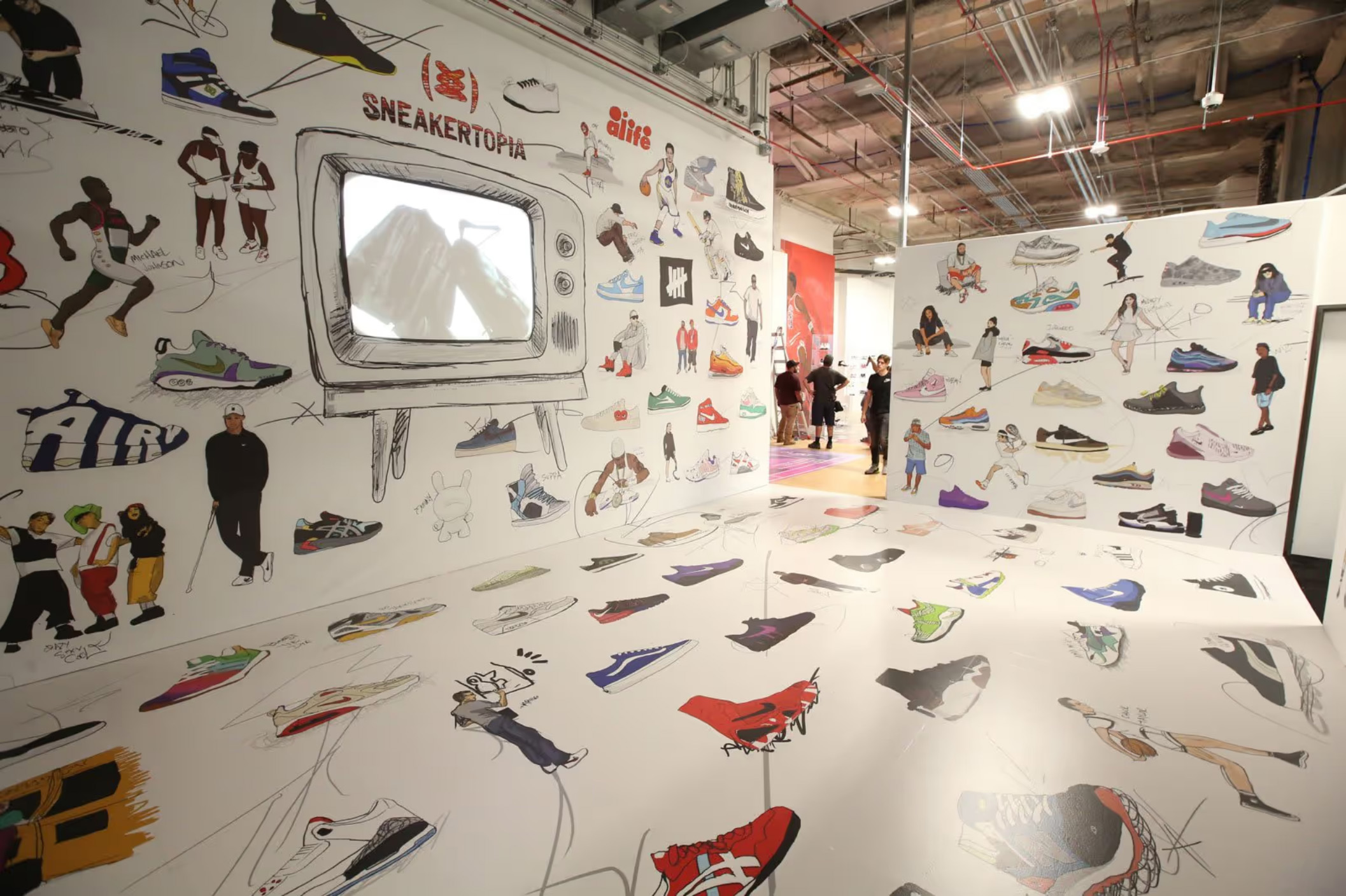
David Kaul: There are two that really stick out to us. The first is Sneakertopia, where we had the opportunity to help transform an entire space as part of an immersive exhibit honoring sneaker culture. We contributed a total of five pieces of work throughout the space. It started with a line of painted celebrities waiting outside (like you would at a sneaker drop), which flowed into a massive 360º painting illustrating the “history of sneakers”, complemented by interactive painted photo moments throughout the space, all celebrating sneaker culture. It was a super ambitious undertaking and was far different than most of what we’d done to date, but the finished product was something really exceptional and told a cohesive story as guests moved through the exhibition.
The other is the Whittier LGBTQ+ Community Center that we did in the summer of 2024. That space was a building that hadn’t been maintained in a while and was going through a full renovation to help bridge the gap for a community that’s been underserved in that part of LA county for a long time. We used 15 different colors creating a geometric rainbow across the entire front of the building, which – to this day – really stands out in that neighborhood. Additionally, we painted a set of illustrated, universally-recognizable historical figures with the message “all are welcome here” to really drive the message home that the space was an inclusive and inviting one. We actually received a commendation from the State Legislature for it, which we’re really proud of.

Question: With backgrounds in graffiti, brand production, and creative direction, how do you see your past experiences influencing the visual language and storytelling behind your murals?
David Kaul: Putting together these experiences really allow us to be incredibly flexible and effective at putting up murals under most circumstances. My background in graffiti taught me how to operate at a huge scale on a lot of different surfaces; brand production helped hone my ability to plan and execute from beginning to end, which is critical when you’re painting murals; and creative direction made me comfortable talking about creative with clients and helping them make decisions about artwork. It all comes together to make us nimble, collaborative, and able to deliver big, bold work – no matter the wall.
Pulling Paint Murals illustrates how public art can interact with its environment and surrounding community. Through their hand-painted murals, David Kaul and Will Cassayd-Smith produce work that reflects the characteristics of the spaces they occupy, providing visual interest while supporting local identity. Their projects highlight the role murals can play as lasting and purposeful components of the urban landscape.

