
MVRDV, in collaboration with Huayi Design, has won the competition to design the Shenzhen Pingshan Sports Park in eastern Shenzhen. The ambitious project includes a multi-sport arena, the new Chinese National Badminton Training Centre, a National Fitness Centre, a publicly accessible sports park, and a set of supporting commercial buildings.
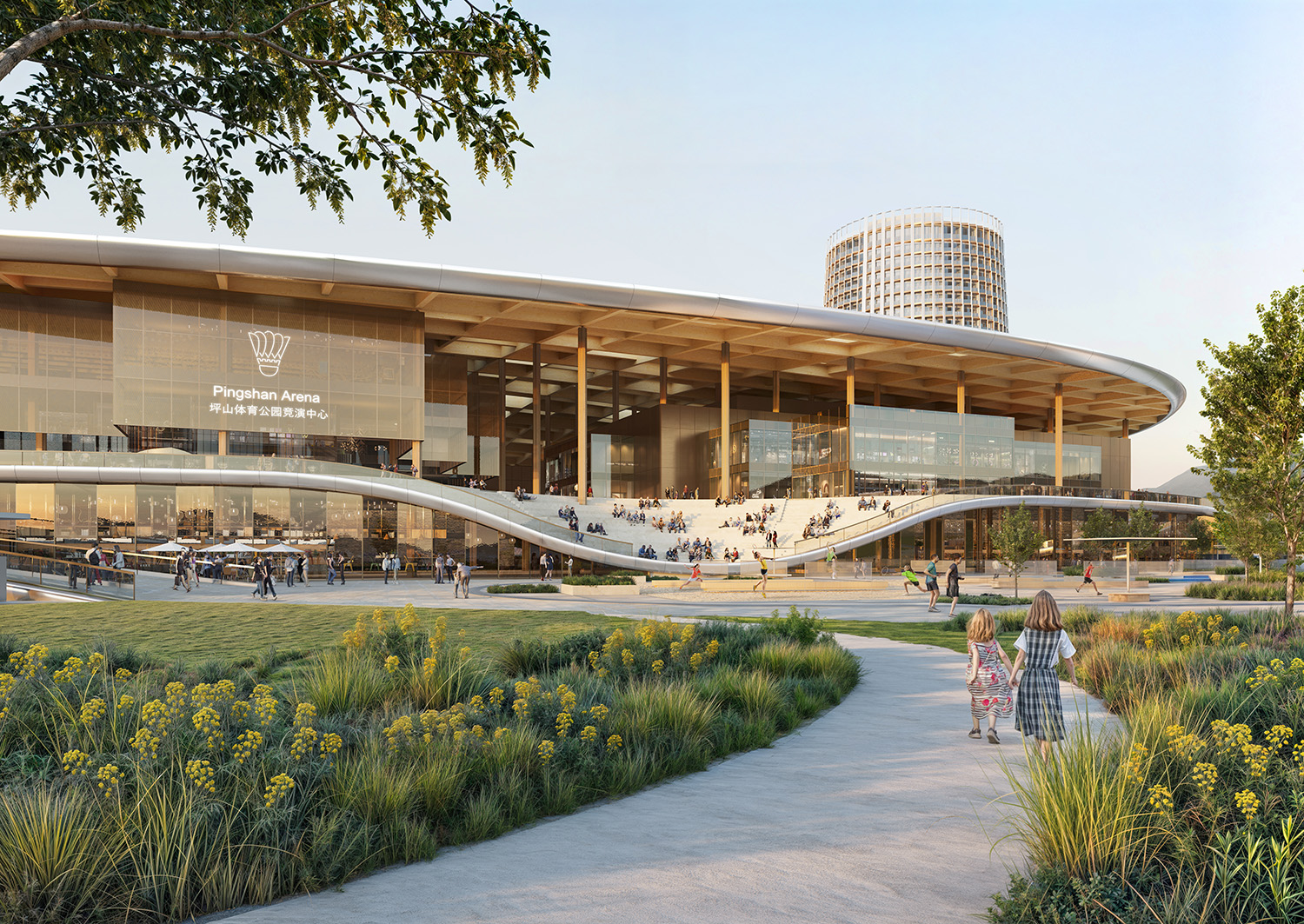
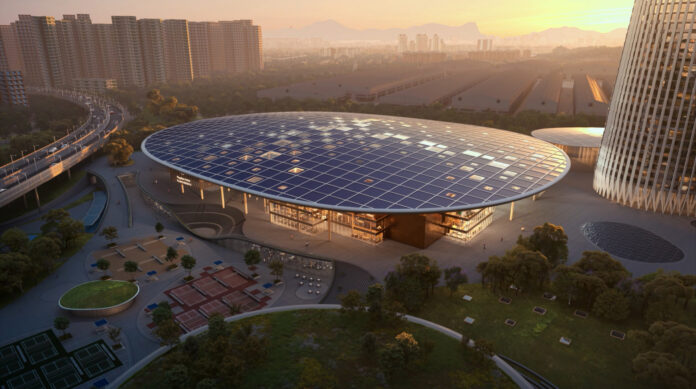
Badminton serves as the primary inspiration for the design, with a total of 100 courts spread across the various facilities. Central to the concept is a 240-metre-long roof shaped like the head of a badminton racket, which defines the complex’s architectural identity. This feature tops the main building, which houses the arena, training courts, and warm-up spaces.
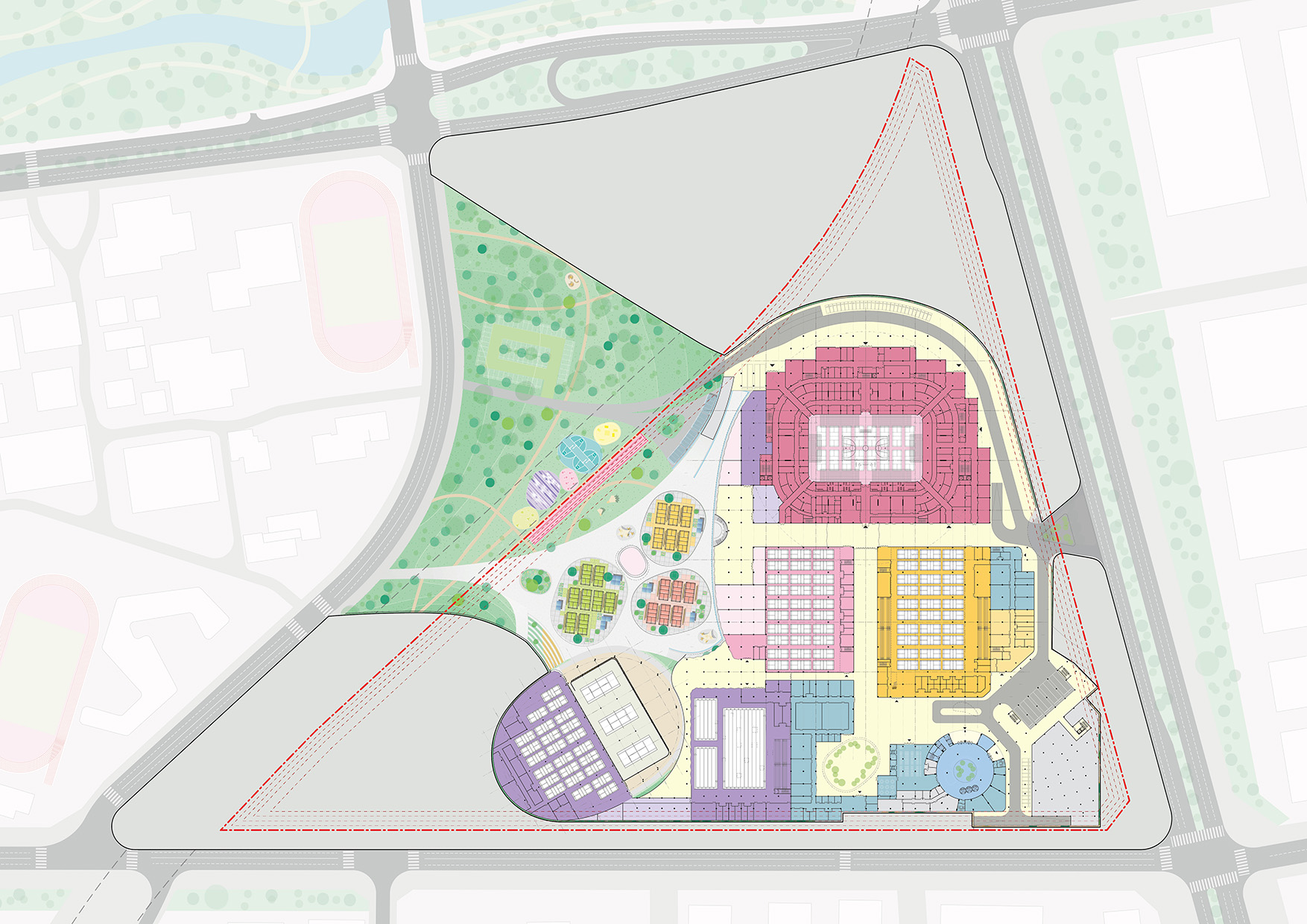
A publicly accessible level interconnects these facilities through broad promenades, forming a T-shaped open space that functions as the social and spatial core of the complex. At the intersection of these promenades is a central plaza known as the “Sweet Spot,” referencing the optimal point of impact on a badminton racket and serving as the inspiration behind the proposal’s name.
Beneath this public level lies a “lower ground” floor that connects the training centre’s various components and provides dedicated spaces for sports science research. This split-level strategy allows elite athletes to move discreetly between training, competition, and recovery zones while maintaining a sense of seclusion.
The expansive roof also integrates sustainable design principles, supporting photovoltaic panels that generate a significant portion of the complex’s energy needs. Its gridded structure recalls the strings of a badminton racket, reinforcing the thematic consistency of the design.
“Given the programme of the complex, it was clear that the Pingshan Sports Park should be a real celebration of all sports, but more than anything else, it should be a celebration of badminton,” said MVRDV founding partner Jacob van Rijs. “With the design of The Sweet Spot, we tackled that requirement head-on with a fun and easily readable concept that anyone can appreciate. At the same time, we took great care to resolve this complex project in a way that is efficient, sustainable, and social.”
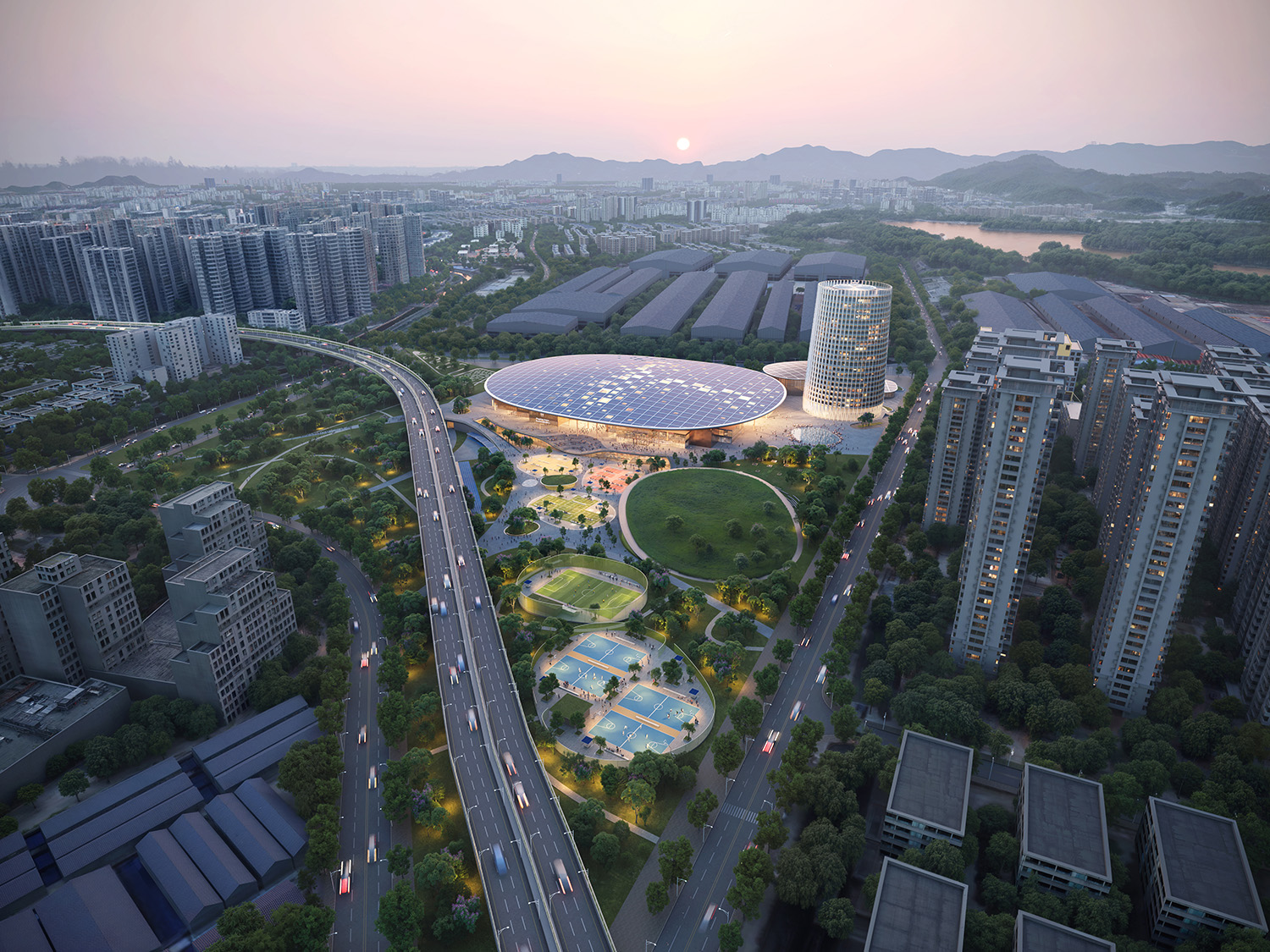
South of the main building stands a 23-storey tower shaped like a shuttlecock, with hotel rooms occupying the lower floors and short-stay apartments for athletes situated above. This tower connects directly to the dual-layer circulation strategy, preserving privacy for athletes while integrating with the broader site. Nearby, in the southeast corner of the site, two smaller commercial buildings echo the racket-shaped architectural motif.
On the west side of the complex, the public upper level descends into a broad tribune overlooking an outdoor sports park. This area includes courts for badminton, basketball, and football, offering valuable recreational infrastructure for the surrounding neighbourhood. Also located here is the National Fitness Centre, housed in another racket-shaped building set into the landscape. This facility provides additional courts, tennis amenities, and a swimming centre for public use.
Although the northern portion of the site, beyond the Pingyan Expressway flyover, was not part of the original competition brief, MVRDV extended the park beneath the elevated roadway. This move connects the development with a larger green corridor that runs through Pingshan and adds new sports spaces including a skate park, mini basketball courts, table tennis tables, a 100-metre sprint track, and a playground.
At Pingshan, The Sweet Spot creates a cohesive sports landscape that welcomes athletes and spectators of all ages and abilities. It offers a world-class badminton training environment while embodying the spirit of the sport through both its function and form.